
The HVAC Contractor’s Essential Guide to General Liability and Tool Protection
HVAC contractors operate in a high-stakes environment where technical precision is a daily requirement. The installation, maintenance, and repair of heating, ventilation, and air conditioning systems involve complex electrical work, pressurized refrigerants, and structural modifications. Managing the various risks associated with these tasks requires a robust understanding of insurance coverage and regulatory compliance. This guide examines the fundamental aspects of General Liability and Tool Protection, specifically tailored for the HVAC industry.
The Foundation of General Liability Coverage
General liability insurance serves as the primary layer of protection for HVAC businesses. It addresses third-party risks that arise during the course of business operations. For a specialty contractor, this coverage is often a prerequisite for obtaining licenses, bidding on commercial contracts, and entering residential properties.
Bodily Injury Protection
In the HVAC sector, bodily injury risks are prevalent. Technicians often work in high-traffic areas or residential homes where homeowners and other tradespeople are present. General liability provides coverage if a third party sustains an injury due to business operations.
Examples of bodily injury risks include:
A customer tripping over a manifold gauge set or vacuum pump left in a hallway.
A pedestrian being struck by a falling component during a rooftop unit installation.
Health issues arising from improper ventilation or carbon monoxide leaks caused by installation errors.
The coverage ensures that the business is protected when these incidents occur on a job site or at the primary business location.
Property Damage Coverage
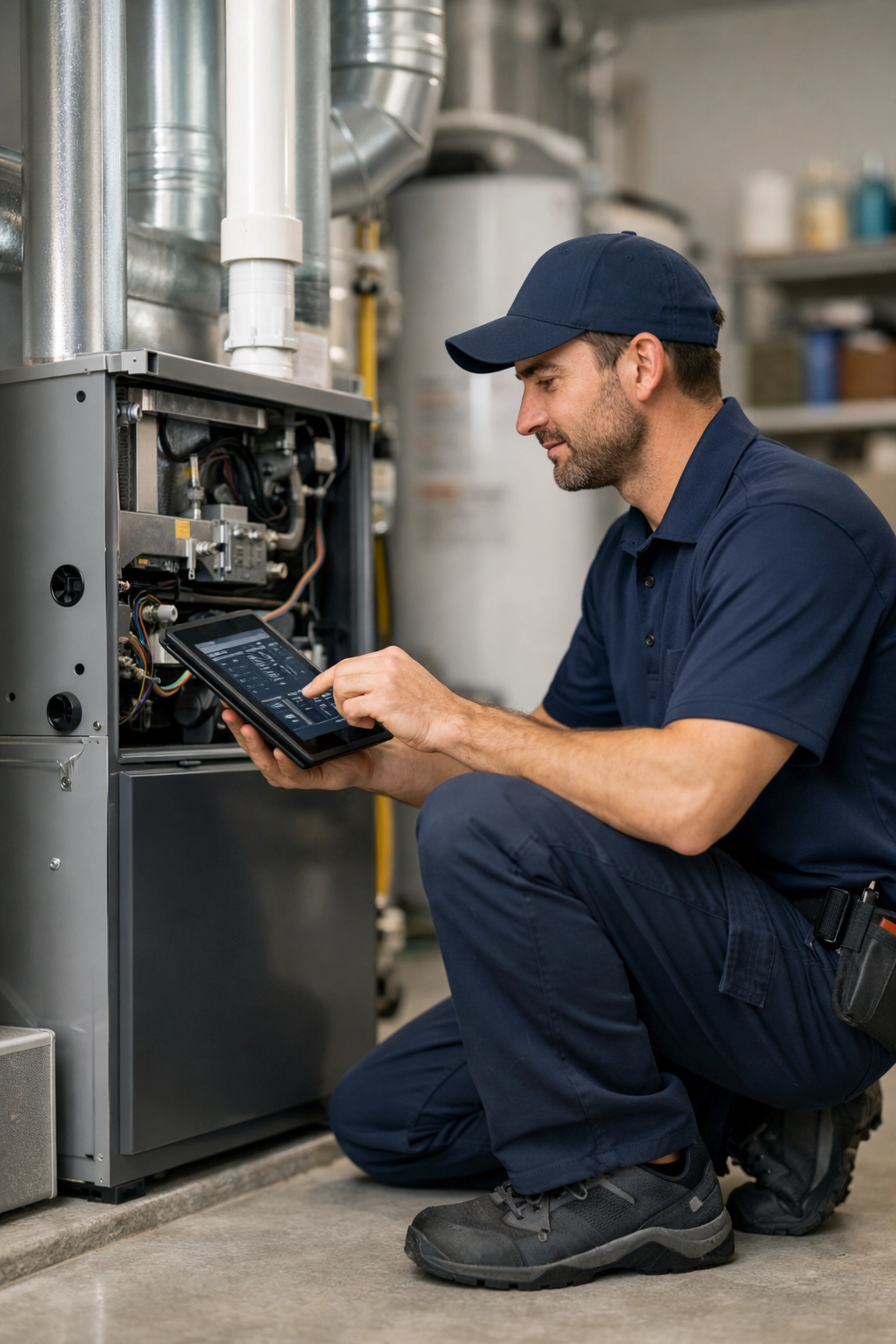
HVAC work frequently involves interacting with a client's most valuable assets. Whether installing a furnace in a basement or a condenser on a roof, the potential for accidental property damage is significant. General liability addresses the costs associated with repairing or replacing third-party property damaged by the contractor.
Common property damage scenarios in HVAC include:
A refrigerant leak causing damage to specialized flooring.
A technician accidentally stepping through drywall while working in an attic.
Water damage resulting from a secondary drain line that was not properly secured.
This coverage is essential for maintaining the financial stability of the firm when accidents occur during the execution of a contract.
Understanding Products and Completed Operations
For HVAC contractors, the risk does not end when the technician leaves the job site. Products and Completed Operations coverage is a vital component of a general liability policy. It addresses injuries or damages that occur after a project is finished and the work has been turned over to the client.
Completed Operations Risks
If a newly installed heating system malfunctions three months after installation and causes smoke damage to the property, the completed operations portion of the policy applies. This protection is critical because HVAC systems are long-term installations. Defects in workmanship may not become apparent immediately.
Product Liability
As contractors often supply the units they install, product liability coverage is necessary. If a specific component, such as a capacitor or a compressor, fails and leads to property damage, the contractor requires protection against the resulting liabilities. This coverage ensures that the business is not held solely responsible for manufacturing defects that lead to operational failures on-site.
For more information on general business protections, visit Insurance Alliance LLC Business Insurance.
Specialized Tool and Equipment Protection
HVAC technicians rely on an array of specialized tools, ranging from simple hand tools to expensive diagnostic computers, leak detectors, and recovery machines. Standard commercial property insurance often limits coverage to items kept at a fixed location. For HVAC contractors, whose "office" is often a mobile van, Inland Marine insurance: specifically Tool and Equipment coverage: is necessary.
Scheduled vs. Unscheduled Tools
Coverage for tools is typically structured in two ways:
Unscheduled Tools: This covers smaller, less expensive items. A total limit is set for all small tools, with a maximum value per item. This is ideal for wrenches, screwdrivers, and basic gauges.
Scheduled Equipment: High-value items, such as thermal imaging cameras, specialized welding equipment, or heavy-duty recovery units, must be specifically listed (scheduled) on the policy. Each item is insured for a specific value based on its replacement cost or actual cash value.
Transit and Off-Site Protection
The primary risk for HVAC tools is during transit or while at a temporary job site. Tool protection policies ensure that equipment is covered regardless of its location. This includes protection against:
Theft from a locked vehicle or a secured job site.
Damage during transport due to a vehicle accident.
Natural disasters that may impact a temporary storage location.
Maintaining an accurate inventory of tools, including serial numbers and purchase dates, is a critical component of managing this coverage.

Multi-State Compliance and Regulatory Standards
HVAC contractors operating across multiple states must navigate a complex web of licensing and insurance requirements. Compliance is not universal, and understanding the specific expectations in each state is vital for legal operation. Insurance Alliance LLC provides guidance for contractors working in diverse regulatory environments.
Florida Compliance (FL)
In Florida, the Construction Industry Licensing Board (CILB) oversees HVAC contractors. Contractors must demonstrate financial responsibility, which includes maintaining specific limits of general liability insurance. Florida regulations emphasize protection against property damage and bodily injury as a condition of maintaining an active license.
Texas Compliance (TX)
The Texas Department of Licensing and Regulation (TDLR) requires air conditioning and refrigeration contractors to hold minimum levels of commercial general liability insurance. Texas also has specific requirements regarding the display of license numbers on vehicles and invoices, which aligns with professional transparency and risk management.
Arizona Compliance (AZ)
The Arizona Registrar of Contractors (ROC) mandates that all licensed contractors maintain a surety bond in addition to liability coverage. The bond serves as a form of consumer protection, while the general liability policy manages the operational risks of the HVAC firm.
Idaho Compliance (ID)
In Idaho, the Division of Occupational and Professional Licenses (DOPL) requires HVAC contractors to be registered and to provide proof of liability insurance. Compliance involves ensuring that the policy remains active throughout the duration of the registration period to avoid administrative penalties.
Washington Compliance (WA)
The Washington State Department of Labor & Industries (L&I) requires HVAC contractors to be registered as specialty contractors. This registration requires a continuous surety bond and a general liability insurance policy with specific minimum limits for property damage and bodily injury.
Learn more about contractor-specific solutions at Insurance Alliance LLC Roofing Contractor Insurance as a reference for specialty trade requirements.
Risk Management and Safety Protocols
Insurance coverage is one part of a comprehensive risk management strategy. Implementing rigorous safety protocols reduces the likelihood of incidents and enhances the overall professionalism of the HVAC firm.
Documentation and Record Keeping
Accurate documentation is the cornerstone of risk management. Contractors should maintain detailed records for every project, including:
Pre-work inspections of the job site to document existing damage.
Signed-off pressure test results for refrigerant lines.
Photographs of completed electrical connections and venting systems.
Maintenance logs for all company-owned tools and diagnostic equipment.
Training and Certification
Ensuring that all technicians hold the necessary NATE (North American Technician Excellence) or EPA 608 certifications is a critical risk mitigation step. Proper training ensures that staff are aware of the safety hazards associated with high-voltage electricity and pressurized gases.
Job Site Safety Checklists
Implementing a mandatory checklist for every service call or installation helps standardize safety. Checklists should include:
Verification of circuit lockout/tagout procedures.
Inspection of ladders and scaffolding.
Confirmation of proper personal protective equipment (PPE), such as safety glasses and gloves.
Clearance of debris from the work area to prevent trip hazards.

Addressing Environmental and Pollution Risks
HVAC contractors handle substances that can pose environmental hazards. Standard general liability policies often contain exclusions for pollution. However, in the HVAC industry, the release of refrigerants or the discovery of mold during a duct cleaning can lead to significant liability.
Pollution Liability Endorsements
Contractors should consider pollution liability endorsements or standalone policies. These address risks such as:
Accidental release of R-410A or other refrigerants.
Improper disposal of hazardous materials.
Disruption of asbestos-containing materials in older buildings during a retrofit.
Managing these environmental risks is essential for compliance with federal EPA regulations and local environmental laws.
Professional Liability for Design-Build Projects
As HVAC contractors move toward design-build models, where they are responsible for the engineering and layout of the system, their risk profile changes. General liability covers "tangible" accidents, but it does not cover "intangible" errors in design.
Errors and Omissions (E&O)
Professional liability, also known as Errors and Omissions, protects the contractor if a system is improperly designed and fails to meet the cooling or heating requirements of a building. If a design flaw leads to the need for a total system redesign or causes a business to lose revenue due to an uninhabitable environment, professional liability is the relevant coverage.

Disaster Recovery and Business Continuity
Beyond daily operational risks, HVAC contractors must prepare for large-scale disasters. Hurricanes in Florida, freezes in Texas, or wildfires in Arizona and Washington can halt business operations instantly.
Recoop Disaster Insurance
For immediate recovery needs following a declared disaster, products like Recoop provide a lump-sum benefit. This benefit can be used for any business expense, such as replacing damaged office equipment, paying key staff during downtime, or covering the costs of moving operations to a temporary location. This specialized coverage complements traditional commercial property policies by providing rapid liquidity when it is needed most.
Explore further disaster recovery options at Insurance Alliance LLC Earthquake Insurance.
Contractual Requirements and Certificates of Insurance
HVAC contractors frequently work as subcontractors for general contractors (GCs). In these scenarios, the contract will dictate the insurance requirements.
Additional Insured Endorsements
Many contracts require the HVAC contractor to name the GC or the property owner as an "Additional Insured" on their general liability policy. This provides the GC with protection under the subcontractor’s policy for claims arising out of the subcontractor’s work.
Waivers of Subrogation
A waiver of subrogation prevents the insurance company from seeking recovery from a third party (like the GC) after paying a claim. This is a common requirement in commercial construction contracts to minimize litigation between parties on a project.
Certificates of Insurance (COI)
The Certificate of Insurance is the standard document used to verify coverage. Contractors must be prepared to provide an updated COI for every new project, ensuring that the limits and coverage types meet the specific demands of the contract.
For a comprehensive overview of how these coverages fit into a broader construction framework, see The Complete Guide to General Contractor Insurance in 2025.
Maintaining Coverage Continuity
Lapses in insurance coverage can have severe consequences for an HVAC business. Beyond the loss of protection, a lapse can lead to:
Immediate suspension of trade licenses.
Breach of contract with current clients.
Difficulty in obtaining coverage in the future.
Contractors should establish a system for monitoring policy expiration dates and ensuring that audits are completed accurately and on time. Transparency regarding the scope of work and the number of employees is vital for maintaining an accurate and effective policy.
Conclusion
The HVAC industry is built on technical expertise and physical labor, both of which carry inherent risks. Protecting a business requires a multi-faceted approach that combines General Liability, Tool and Equipment protection, and adherence to state-specific compliance standards. By prioritizing risk management, maintaining rigorous safety protocols, and ensuring all contractual insurance requirements are met, HVAC contractors can focus on delivering high-quality service while securing the longevity of their business.
For more information on the types of coverage available for specialty contractors, visit Insurance Alliance LLC.

Insurance Alliance LLC Professional Insurance Solutions Sitemap | Privacy Policy


Comments