
Understanding Professional Liability and Malpractice Insurance for Dentists
- marketing676641
- Nov 27, 2025
- 5 min read
Professional liability insurance protects dentists from claims alleging negligence, errors, or omissions in patient care. This specialized coverage shields dental professionals from potentially devastating financial consequences that arise from malpractice lawsuits. Dentists face unique risks that require targeted protection beyond standard business insurance policies.
What Professional Liability Insurance Covers
Professional liability insurance covers claims related to your clinical work as a dentist. The policy responds when patients allege you provided inadequate or harmful treatment. Coverage includes legal defense costs, court judgments, and settlements reached outside of court.
The insurance protects against various scenarios that can occur in dental practice. Misdiagnosis claims arise when you incorrectly identify a patient's condition, such as mistaking an abscess for a cavity. Treatment complications coverage applies when procedures result in unexpected outcomes or patient injury. The policy also covers claims related to improper record-keeping and breach of patient confidentiality.
Common situations that trigger professional liability claims include nerve damage during extractions, failed root canal treatments, and allergic reactions to materials. The insurance covers your legal defense even when claims prove unfounded. This protection allows you to focus on patient care without constant concern about litigation risks.

Claims-Made vs Occurrence Coverage
Professional liability policies operate under two distinct coverage structures. Understanding these differences helps you select appropriate protection for your practice.
Claims-made coverage protects you for claims filed during the active policy period, regardless of when the incident occurred. If a patient files a lawsuit during your current policy term for treatment provided years earlier, your current insurance responds to the claim. This flexibility allows coverage to follow claims rather than incidents.
Occurrence coverage protects you for incidents that happen during the policy period, even if claims are filed after the policy expires. This structure provides long-term protection for past treatments but may not be available in all states. The coverage continues indefinitely for qualifying incidents.
Most dental malpractice policies use claims-made coverage. This structure requires continuous coverage to maintain protection. Gaps in coverage can leave you vulnerable to claims for past treatments.
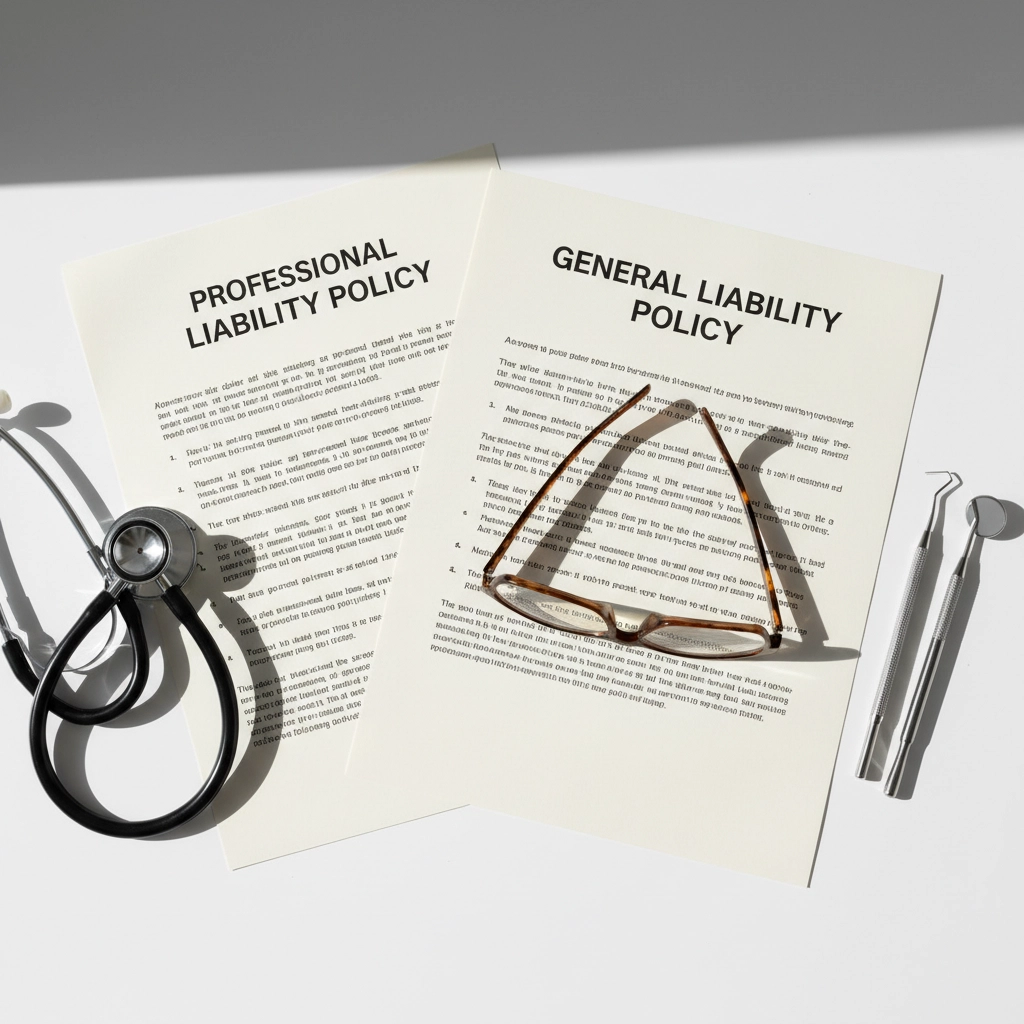
Professional Liability vs General Liability
Professional liability and general liability insurance serve different protective functions in your dental practice. These coverages complement each other but address distinct risk categories.
Professional liability covers errors and negligence in your treatment of patients. The coverage applies to clinical decisions, diagnostic mistakes, and treatment complications. Claims typically involve allegations of substandard care or professional misconduct.
General liability protects against non-clinical incidents that occur in your office. This coverage responds to slip-and-fall accidents, property damage, and injuries unrelated to dental treatment. The insurance also covers product liability claims for defective equipment or materials used in your practice.
The distinction between coverages depends on where and how incidents occur. Professional liability applies to treatment chair activities, while general liability covers everything else in your business operations.
Essential Coverage Components
Professional liability policies include several key components that determine your level of protection. Understanding these elements helps you evaluate policy options and select adequate coverage limits.
Defense costs coverage pays for attorneys, expert witnesses, and court expenses associated with defending malpractice claims. These costs can accumulate quickly, even for claims that ultimately prove unfounded. Quality policies provide defense coverage in addition to settlement and judgment limits.
Settlement coverage allows your insurance company to resolve claims outside of court. Many malpractice cases settle before trial, often reducing total costs and avoiding lengthy legal proceedings. Your insurer typically requires your consent before settling claims.
Consent-to-settle clauses give you input on settlement decisions. These provisions prevent insurance companies from settling claims without your approval, protecting your professional reputation. However, some policies include "hammer clauses" that limit coverage if you refuse recommended settlements.
Prior acts coverage extends protection to treatment provided before your policy effective date. This endorsement is crucial when changing insurance companies or starting new coverage. Without prior acts coverage, you remain vulnerable to claims for past treatments.
Coverage Limitations and Exclusions
Professional liability policies contain important limitations that affect your protection. Reviewing these restrictions helps you understand policy scope and identify potential coverage gaps.
Policy limits establish maximum amounts your insurer will pay for claims and defense costs. Per-claim limits apply to individual incidents, while aggregate limits cap total annual payouts. Selecting adequate limits requires careful consideration of potential exposure and local jury award trends.
Exclusions remove specific situations from coverage. Common exclusions include intentional acts, criminal behavior, and business disputes unrelated to patient care. Some policies exclude coverage for experimental treatments or procedures outside your scope of practice.
Coverage for employed staff requires careful attention. Policies may not automatically extend protection to dental hygienists and assistants. Some insurers only cover employees when you are named in claims, leaving staff vulnerable to individual lawsuits.

State-Specific Considerations
Dental professionals practicing in Florida, Texas, Arizona, Idaho, and Washington must understand state-specific requirements and regulations affecting professional liability coverage.
State licensing boards establish scope of practice rules that influence coverage needs. Expanded practice privileges may require additional policy endorsements. Understanding your state's dental practice act helps ensure adequate coverage for all authorized procedures.
Regulatory requirements vary by state regarding insurance disclosure and patient notification. Some states require dentists to inform patients about malpractice insurance status. Compliance with these requirements protects your license and practice operations.
Legal environments differ across states, affecting claim frequency and severity. Some jurisdictions have implemented tort reform measures that limit damage awards, while others maintain more plaintiff-friendly legal climates. Your insurance needs should reflect local litigation patterns.
Specialty Practice Considerations
Different dental specialties face varying malpractice risks that require customized coverage approaches. Specialty-specific policies often provide more appropriate protection than general dental coverage.
Oral surgeons face higher liability exposure due to complex procedures and anesthesia use. Coverage needs include protection for surgical complications, nerve damage, and anesthesia-related incidents. Policies should address both inpatient and outpatient procedures.
Orthodontists require coverage for treatment extending over multiple years. Long treatment periods increase exposure to changing patient circumstances and delayed claim reporting. Policies must account for extended care relationships and potential outcome dissatisfaction.
Endodontists need protection against claims related to treatment failures and complications. Root canal procedures involve inherent risks that can result in patient injury or treatment failure. Coverage should address both immediate complications and long-term treatment outcomes.

Selecting Appropriate Coverage
Choosing professional liability insurance requires careful evaluation of multiple factors affecting your practice risks and coverage needs.
Practice type influences coverage requirements. Solo practitioners need individual coverage, while group practices may benefit from shared policies. Employment situations require coordination between individual and employer-provided coverage.
Patient volume and procedure complexity affect liability exposure. High-volume practices face greater claim frequency risks, while complex procedures increase potential severity. Coverage limits should reflect both factors in your practice profile.
Financial assets need protection from potential judgments exceeding policy limits. Personal asset protection strategies may include higher coverage limits or umbrella policies providing additional protection layers.
Professional liability insurance represents essential protection for dental professionals facing increasing litigation risks. Comprehensive coverage allows you to practice confidently while protecting your financial security and professional reputation.
Insurance Alliance LLC provides specialized dental professional liability coverage tailored to protect your practice across Florida, Texas, Arizona, Idaho, and Washington. Our experienced team understands the unique risks facing dental professionals and delivers customized solutions for your coverage needs.


Comments