
The Mechanics of Recoop: A Deep-Dive into Lump-Sum Multi-Peril Disaster Recovery
- marketing676641
- Apr 21
- 5 min read
The landscape of disaster recovery for commercial entities and property owners is evolving. Traditional property insurance models focus on indemnity, which requires a lengthy process of adjusters, damage assessments, and repair estimates. Recoop Disaster Insurance introduces a different mechanism: a parametric-like, multi-peril recovery system designed to provide immediate liquidity. This technical deep-dive examines how the lump-sum cash benefit functions, the specific triggers required for disbursement, and how it integrates with a standard business owners policy.
The Multi-Peril Architecture
Recoop operates as a multi-peril solution, meaning it addresses a broad spectrum of natural disasters under a single coverage structure. Unlike specialized policies that only cover one type of event, such as a standalone earthquake policy, Recoop consolidates various high-impact perils. This simplifies the risk management framework for business owners who face diverse geographic hazards.
The covered perils include:
Hurricanes: Including wind damage and storm surge.
Tornadoes: Addressing high-wind impact and debris-related damage.
Wildfires: Covering fire damage and smoke contamination.
Earthquakes: Focusing on seismic shifts and structural impact.
Gas Explosions: Addressing catastrophic utility failures.
Winter Storms: Covering ice, snow loads, and freezing conditions.
Dust Storms: Addressing atmospheric events that cause property degradation.
By housing these under one technical trigger mechanism, the recovery process becomes streamlined. There is no need to navigate different policy forms for different events; the activation requirements remain consistent regardless of the peril.

Technical Triggers for Disbursement
The defining characteristic of Recoop is its trigger-based mechanism. Traditional insurance relies on the "principle of indemnity," which seeks to put the insured back in the exact financial position they were in prior to the loss. This requires exhaustive proof of loss. Recoop utilizes a two-factor verification process that bypasses the traditional appraisal cycle.
1. The Disaster Declaration
The first technical trigger is an external administrative action. The property must be located within an area that has received a state or federal disaster declaration. This provides an objective, third-party confirmation that a catastrophic event has occurred in the vicinity. This eliminates the need for the insurer to individually verify the existence of a widespread event, speeding up the initial phase of the recovery cycle.
2. The $1,000 Damage Threshold
The second trigger is internal to the property. The policyholder must demonstrate that the property sustained at least $1,000 in damages. This is not a deductible in the traditional sense. Instead, it serves as a "threshold trigger." Once the $1,000 damage mark is verified, the full lump-sum benefit is activated.
The Liquidity Bridge: Lump-Sum vs. Indemnity
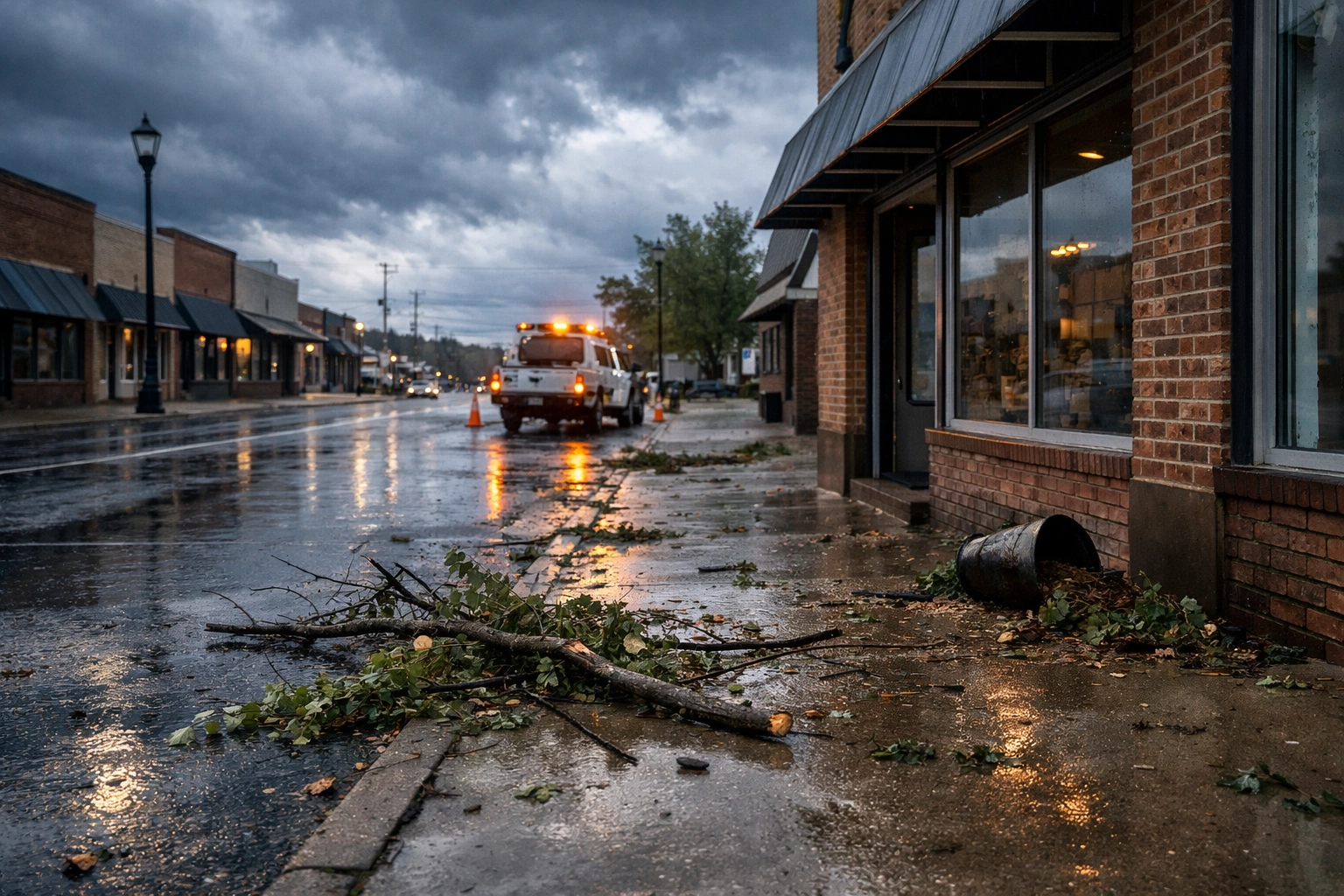
A standard business owners policy or commercial property policy is designed for long-term reconstruction. These policies often have significant deductibles and require multiple inspections before a large check is issued. In a post-disaster environment, the primary challenge for a business is not just the total damage, but the immediate lack of cash flow.
Recoop functions as a "liquidity bridge." The lump-sum benefit, ranging from $5,000 to $25,000, is intended to cover the immediate expenses that traditional insurance often ignores or delays. Because the payment is a cash benefit, there are no restrictions on how the funds are deployed.
Technical applications for the lump-sum benefit include:
Deductible Funding: Using the cash to cover the high deductibles found in primary property insurance policies.
Immediate Debris Removal: Hiring private contractors for site clearing before an adjuster arrives.
Temporary Relocation: Securing short-term office space or housing to maintain operations.
Payroll Continuity: Ensuring staff are paid while the main facility is inaccessible.
Emergency Equipment Rental: Leasing generators, drying equipment, or temporary refrigeration.
Disbursement Mechanics and Timeline
The speed of the Recoop mechanism is its most critical technical advantage. While traditional property claims can take weeks or months to reach a settlement, Recoop targets a 24-48 hour window for payment disbursement following claim approval.
The process follows this sequence:
Notification: The insured notifies Recoop after a disaster declaration is made and damage is identified.
Verification: Evidence of the $1,000 damage threshold is provided. This is often done through photos or basic documentation rather than a full site visit by a traditional adjuster.
Approval: The system verifies the disaster declaration status and the damage evidence.
Transfer: The full lump-sum benefit is deposited directly into the insured’s account.
This rapid cycle is possible because the benefit is a fixed amount. There is no negotiation over the "value" of a roof or the "depreciation" of equipment. The technical question is binary: Did the disaster occur, and is there $1,000 in damage? If yes, the benefit is issued.

Integration with Primary Insurance
Recoop is not a replacement for property insurance. It is a specialized layer of recovery that sits alongside it. To be eligible for Recoop, the policyholder must maintain an active underlying homeowners or renters insurance policy (for residential) or a standard commercial policy (for business).
This integration creates a comprehensive risk management stack. The primary policy handles the heavy lifting of structural replacement and long-term business interruption. Recoop handles the immediate "friction" of the disaster: the small but urgent costs that can paralyze a business in the first 72 hours.
For more information on how this fits into a broader strategy, view our insurance alliance blog.
Peril-Specific Technicalities
The multi-peril nature of Recoop requires a technical understanding of how different disasters are treated.
Hurricanes and Storm Surge
In the traditional market, "wind" and "water" are often separated. Standard property policies may exclude storm surge. Recoop’s technical language includes both wind and surge under the hurricane peril. This eliminates the technical dispute over whether the wind or the water caused the initial damage, as the trigger is the disaster declaration and the $1,000 damage threshold.
Wildfires and Smoke
Wildfire recovery often involves specialized cleaning and air quality restoration. Recoop provides the immediate funds to begin these processes before smoke particulates cause permanent damage to inventory or electronics.
Winter Storms and Gas Explosions
These events often lead to infrastructure failure. Recoop's mechanics allow for the immediate purchase of auxiliary power or heating solutions, preventing further secondary damage such as burst pipes or mold growth.

Geographic and Operational Eligibility
Recoop is currently available in 37 states, providing a wide geographic footprint for multi-state operations. The eligibility is tied to the location of the risk. For business owners with multiple locations, each site can be protected individually, ensuring that a disaster in one region provides localized liquidity without affecting the overall corporate insurance structure.
The technical requirements for enrollment are straightforward:
Active underlying property coverage.
Property located in a supported state.
Selection of a benefit level (e.g., $10,000, $25,000).
Managing the Recovery Gap
The "recovery gap" is the period between the disaster event and the restoration of normal operations. This gap is where most businesses fail. The cause of failure is rarely the lack of insurance; it is the lack of immediate cash. By utilizing a lump-sum multi-peril mechanism, Recoop effectively narrows this gap.
The technical mechanics of Recoop provide a level of certainty in an uncertain environment. Knowing that a specific dollar amount will be available within 48 hours allows management to make faster decisions regarding recovery and continuity.
To explore the technical specifications of Recoop disaster insurance further, or to integrate it into your current risk portfolio, get a quote through our specialized portal.
Insurance Alliance LLC Professional Disaster Recovery Solutions


Comments