
Florida HVAC Contractor Insurance: Refrigerant Rules, Equipment Breakdown, and the New Normal for AC Pros
Florida HVAC contractors operate at the intersection of construction, mechanical service, electrical work, transportation, refrigerant handling, and property protection.
That mix creates a technical insurance profile.
A standard contractor package may not address every exposure created by refrigerant, rooftop equipment, recovery machines, customer property, mobile tools, completed installations, or digital scheduling systems. The policy must reflect what the business actually does.
This guide explains the main insurance and compliance issues facing Florida HVAC contractors in 2026. It covers:
Florida contractor licensing and insurance documentation
EPA Section 608 refrigerant requirements
HFC management and recovery obligations
Equipment breakdown exposures
Inland marine protection for mobile tools
General liability insurance for HVAC operations
Commercial auto coverage for service fleets
Commercial property protection for shops and warehouses
Pollution and environmental liability considerations
Contract requirements and risk management controls
Coverage coordination for residential, commercial, and refrigeration work
Insurance Alliance helps HVAC contractors throughout Florida review these exposures and build insurance programs tailored to their operations.
The Florida HVAC Insurance Problem Is More Technical Than a Certificate
Many HVAC companies begin with a basic general liability policy and a commercial auto policy. Those coverages can be important, but they do not automatically address every part of HVAC work.
An HVAC business may perform several different types of operations:
Residential air conditioning installation
Commercial HVAC service
Refrigeration repair
Rooftop unit installation
Ductwork and ventilation work
Heat pump installation
Chiller maintenance
Indoor air quality services
Electrical connections related to HVAC systems
Refrigerant recovery and charging
Emergency service calls
Preventive maintenance agreements
Equipment design or system recommendations
Each operation creates a different risk profile.
A contractor that only replaces residential split systems may need a different insurance structure than a company servicing commercial chillers, supermarket refrigeration, or industrial mechanical systems.
The first step is accurate classification.
The insurer should know:
What equipment the business services
Whether the business handles refrigerants
Whether the business performs refrigeration work
Whether technicians work on rooftops
Whether the business performs design or consulting services
Whether the company hires subcontractors
Whether service agreements are sold
Whether the company works for general contractors
Whether vehicles carry tools and equipment overnight
Whether the company owns a shop, warehouse, or office
Whether technicians use electronic scheduling and payment platforms
Understating operations can create a serious coverage problem. A policy built around residential service may not be appropriate when the business expands into large commercial refrigeration or industrial mechanical work.
For a broader overview, review Florida Business Insurance and Florida Contractors Insurance.
Florida HVAC Licensing and Insurance Documentation
Florida regulates contracting through the Florida Department of Business and Professional Regulation and the Construction Industry Licensing Board.
Florida Statutes Section 489.115 states that a person may not engage in the business of contracting without the proper certification or registration. The statute also requires an insurance affidavit as a condition for initial issuance or renewal.
The affidavit addresses:
Workers’ compensation requirements where applicable
Public liability insurance
Property damage insurance
This makes insurance documentation part of the licensing process for Florida contractors.
The Florida HVAC business structure also matters. A business may operate through a qualifying contractor, and the scope of work must remain within the applicable license classification.
HVAC companies should verify licensing questions directly with the Florida DBPR and CILB. Insurance does not replace a contractor license, and a certificate of insurance does not prove that a company is licensed for every type of work it performs.
A sound compliance file should include:
Active contractor license information
Qualifying agent information
Current insurance policies
Certificates of insurance
EPA Section 608 certifications
Equipment maintenance records
Refrigerant recovery documentation
Written safety procedures
Subcontractor insurance records
Customer contracts and service agreements
Keep these documents organized and current. A contractor that cannot quickly demonstrate licensing, certification, and insurance status may lose access to projects or face delays during contract review.
EPA Section 608 Is a Federal Requirement
Florida HVAC licensing and federal refrigerant compliance are separate responsibilities.
EPA Section 608 of the Clean Air Act establishes the National Recycling and Emission Reduction Program. The program prohibits intentional venting of ozone-depleting substance refrigerants and substitutes, including hydrofluorocarbons, during the maintenance, service, repair, or disposal of stationary air conditioning and refrigeration equipment.
The EPA identifies several certification categories:
Type I for small appliances
Type II for high-pressure appliances
Type III for low-pressure appliances
Universal certification covering Types I, II, and III
Technicians who service equipment containing regulated refrigerants need the appropriate Section 608 certification.
The certification issue is not simply an administrative box to check. It connects directly to operational controls and insurance underwriting.
A contractor should be able to show that:
Technicians have the correct certification
Refrigerant is recovered before opening a system
Recovery machines are maintained
Recovery cylinders are handled properly
Refrigerant is not intentionally vented
Technicians understand system pressure and refrigerant type
Records are maintained when required
Used refrigerant is sent to an appropriate reclamation or recycling channel
Read the EPA Section 608 stationary refrigeration and air conditioning guidance for current federal requirements.
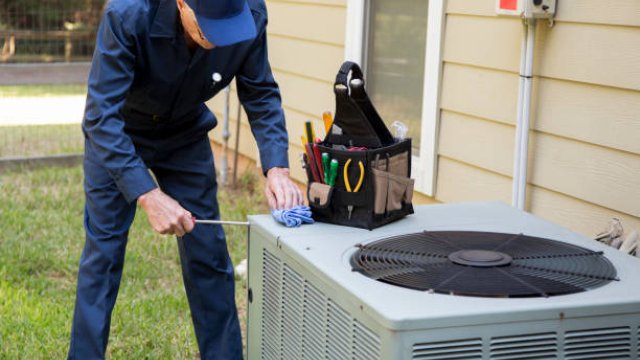
The Refrigerant Landscape Has Changed
The refrigerant environment is no longer static.
HVAC contractors may work with legacy refrigerants, HFCs, lower-global-warming-potential substitutes, and newer systems that require different handling procedures. Equipment manufacturers, distributors, building owners, and regulators are all adapting to changes in refrigerant management.
The EPA’s 2024 Emissions Reduction and Reclamation Rule addresses certain HFCs and substitutes. The rule includes provisions involving:
Leak repair for certain appliances
Automatic leak detection for certain equipment
Reclaimed HFC standards
Servicing and repair using reclaimed refrigerants
Recovery from disposable cylinders before disposal
Recordkeeping
Reporting
Labeling
The application of these requirements depends on the equipment, refrigerant, charge size, and other regulatory details. Contractors should not assume that every system is treated the same way.
The operational lesson is direct:
Refrigerant compliance must be built into the service process, not handled after the work is complete.
HVAC companies should identify:
Which refrigerants technicians handle.
Which equipment categories the company services.
Whether any serviced appliances meet applicable charge thresholds.
Which leak detection or documentation requirements apply.
Which recovery and reclamation procedures are required.
Which employees are authorized to perform refrigerant work.
Which equipment is used for recovery, evacuation, charging, and testing.
The EPA’s current HFC management resources should be reviewed regularly because federal requirements can change.
Refrigerant Exposure Is Not Automatically a General Liability Exposure
This is where HVAC insurance becomes technical.
General liability insurance is designed to address certain third-party bodily injury, property damage, personal injury, advertising injury, and completed-operations exposures. However, standard liability policies commonly contain pollution exclusions.
A refrigerant release may be treated as a pollutant or environmental event depending on the facts and policy language.
That means an HVAC contractor should not assume that general liability insurance automatically covers:
Accidental refrigerant releases
Cleanup expenses
Contamination allegations
Regulatory response
Environmental investigation
Air-quality allegations
Chemical discharge
Damage resulting from improper refrigerant handling
The actual answer depends on the policy form, exclusions, endorsements, and circumstances. A coverage review should specifically address refrigerant and chemical exposures instead of relying on a generic certificate.
Some HVAC contractors may need to evaluate specialized pollution or environmental liability coverage. This can be relevant when the business:
Handles refrigerants regularly
Services large systems
Performs commercial refrigeration work
Uses chemical cleaners or treatments
Works in sensitive facilities
Performs system decommissioning
Has contractual environmental obligations
Works around occupied buildings
Provides maintenance programs for large property owners
A contractor should disclose the full scope of refrigerant work during underwriting. The goal is to identify exclusions before a serious event occurs.
Equipment Breakdown and Contractor Equipment Are Different
The term “equipment breakdown” can refer to two separate insurance questions.
1. Breakdown of the customer’s installed HVAC system
A building owner may need equipment breakdown coverage for sudden and accidental mechanical or electrical failure of installed equipment.
Examples include:
Compressor failure
Motor burnout
Electrical panel failure
Boiler malfunction
Chiller damage
Pressure vessel failure
Refrigeration system failure
Mechanical failure caused by an electrical event
This coverage generally belongs on the property owner’s commercial insurance program. It is not a substitute for the HVAC contractor’s liability insurance.
2. Damage to the contractor’s mobile tools and equipment
The HVAC contractor owns a different category of property.
Examples include:
Refrigerant recovery machines
Vacuum pumps
Charging scales
Electronic leak detectors
Manifold gauge sets
Combustion analyzers
Electrical testing meters
Diagnostic tablets
Brazing equipment
Portable generators
Ladders
Hand tools
Power tools
Duct testing equipment
These items travel from the shop to vehicles, jobsites, rooftops, attics, and mechanical rooms.
Commercial property insurance may provide limited protection at the scheduled business premises. It may not provide the same protection while equipment is in transit or located away from the insured location.
That is why inland marine insurance is often important for HVAC contractors.
Inland marine coverage may be structured to address covered mobile equipment while it is:
In a service vehicle
At a customer location
At a temporary jobsite
In transit
Temporarily stored
Used on a construction project
The contractor should maintain a current equipment schedule. Include:
Item description
Manufacturer
Model number
Serial number
Replacement value
Purchase date
Storage location
Assigned vehicle
Use classification
A vague tools-and-equipment description may not be sufficient for expensive diagnostic or recovery equipment.
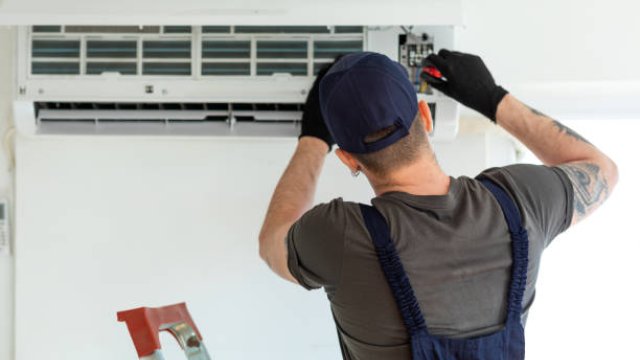
General Liability Insurance Is the Core HVAC Liability Layer
Florida General Liability Insurance is often the foundation of a Florida HVAC contractor insurance program.
It may address covered third-party allegations involving:
Bodily injury
Property damage
Personal and advertising injury
Products and completed operations
Premises and operations
Legal defense expenses
HVAC contractors work in environments where property damage can occur quickly.
Common exposure points include:
Removing old equipment
Cutting through ceilings or walls
Opening mechanical rooms
Connecting condensate lines
Modifying ductwork
Connecting electrical components
Working above finished floors
Moving equipment through occupied spaces
Using torches or brazing equipment
Mounting rooftop equipment
Working around sensitive electronics
Servicing refrigeration systems near inventory
General liability insurance does not guarantee coverage for every workmanship dispute or defective installation allegation. Policy language matters. Exclusions, definitions, deductibles, endorsements, and completed-operations provisions should be reviewed with an insurance professional.
The contractor should also review whether the policy appropriately reflects:
Residential work
Commercial work
Refrigeration work
New construction
Service and repair
Maintenance contracts
Subcontracted operations
Work performed for general contractors
Work performed in occupied buildings
A contractor that performs multiple types of work needs a policy aligned with the broadest actual operation.
Completed Operations Deserves Specific Attention
HVAC systems often operate continuously after installation.
A problem may not become apparent during the installation itself. It may surface after the contractor leaves the site and the system begins operating under normal conditions.
Completed-operations exposure can involve:
Improper condensate drainage
Incorrect refrigerant charging
Inadequate airflow
Duct connection problems
Improper electrical connections
Failed equipment mounting
Water intrusion
Damage to ceilings or finished areas
System performance allegations
Damage to connected property
Coverage for completed operations depends on the policy and the facts. A certificate of insurance does not explain how completed operations applies.
Contractors should examine:
Whether completed operations is included
How long the coverage applies
Whether the work classification is accurate
Whether a subcontractor’s work is covered
Whether contractual requirements request completed-operations wording
Whether the policy contains exclusions affecting the work
Project owners and general contractors may require completed-operations coverage to remain in place for a specified period after the project ends.
Commercial Auto Insurance for HVAC Service Vehicles
HVAC contractors spend substantial time on the road.
Service vans and trucks carry technicians, parts, tools, refrigerant cylinders, ladders, recovery machines, and replacement equipment. A company vehicle may also function as a mobile warehouse.
Florida Commercial Auto Insurance can address covered liability associated with business-owned vehicles. Depending on the policy, it may also include physical damage protection for scheduled vehicles.
HVAC contractors should review:
Vehicle ownership
Vehicle title and registration
Employee drivers
Driver eligibility
Vehicle radius
Overnight parking
Trailer use
Permanently installed equipment
Tools carried inside vehicles
Refrigerant cylinders transported in vehicles
Hired and non-owned vehicle use
Replacement vehicle needs
Personal auto insurance is often not designed for regular business use, commercial service activity, or company-owned vehicles.
The vehicle policy should also be coordinated with inland marine coverage. Commercial auto coverage generally focuses on the vehicle and its auto liability exposure. It may not automatically cover every tool, part, or piece of equipment inside the vehicle.
A written vehicle control program can help reduce risk. It should address:
Authorized drivers
Driver record review
Vehicle inspection
Backup camera use
Safe reversing procedures
Secure overnight parking
Tool inventory
Refrigerant cylinder storage
Accident reporting
Preventive maintenance
Commercial Property Insurance for HVAC Shops and Warehouses
An HVAC contractor may begin from a small office and later add:
A parts warehouse
A fabrication area
A dispatch office
A training room
A storage yard
A showroom
A vehicle maintenance area
A refrigerant storage area
Florida Commercial Property Insurance may help protect covered buildings and business personal property at an insured location.
Important property categories include:
Office furniture
Computers
Dispatch systems
Inventory
Replacement parts
Refrigerant cylinders
Shelving
Shop equipment
Fabrication tools
Security systems
Tenant improvements
Business records
Signage
The location itself matters.
Review:
Building construction
Roof condition
Electrical system
Fire protection
Security controls
Flood exposure
Wind exposure
Inventory storage
Cylinder storage
Flammable materials
Backup power
Drainage
Business continuity procedures
An HVAC shop may also need to examine equipment breakdown coverage for its own property. Property coverage and equipment breakdown coverage address different causes of loss, and one should not be assumed to replace the other.
Flood Exposure Applies to HVAC Contractors Too
Flood is not limited to homeowners.
HVAC contractors may have flood exposure involving:
Service vehicles
Portable equipment
Stored inventory
Replacement compressors
Refrigerant cylinders
Warehouse contents
Office equipment
Jobsite materials
Temporary storage
Commercial property insurance generally does not provide broad flood protection for rising water, storm surge, or accumulated surface water.
Review Florida Flood Insurance when the business operates near the coast, waterways, drainage systems, low-lying areas, or flood-prone commercial corridors.
A contractor should evaluate both the permanent location and mobile property exposures. A warehouse policy may not automatically provide the same protection for equipment stored in a vehicle or temporarily located at a jobsite.
Flood planning should include:
Vehicle relocation procedures
Inventory elevation
Backup records
Equipment storage
Warehouse drainage
Emergency communication
Supplier continuity
Temporary dispatch arrangements
HVAC Contractors Often Need Contract-Specific Insurance Language
HVAC contractors frequently work for:
General contractors
Property managers
Commercial landlords
Homebuilders
Facility managers
Municipal entities
Developers
Homeowners associations
Industrial owners
Retail property operators
Each contract may impose different insurance requirements.
Common provisions include:
General liability limits
Completed operations
Additional insured status
Primary and non-contributory wording
Waiver of subrogation
Commercial auto liability
Umbrella liability
Evidence of coverage
Notice provisions
Subcontractor insurance requirements
The certificate is only a summary. It does not create coverage or replace the policy endorsements.
Before signing a contract, provide the insurance requirements to your agency. The agency can review whether the requested wording is available and whether the underlying policy supports it.
This is especially important for HVAC work involving:
Hospitals
Schools
Data centers
Manufacturing facilities
High-rise buildings
Industrial plants
Retail centers
Multi-family properties
Government facilities
The more sensitive the facility, the more precise the contract review should be.
Design, Recommendations, and Professional Liability
Some HVAC contractors perform more than installation and repair.
A business may also:
Design system layouts
Recommend equipment
Prepare performance specifications
Calculate load requirements
Advise on energy systems
Develop maintenance plans
Review building performance
Provide commissioning services
Certify system performance
These services may create professional liability or errors-and-omissions exposure.
General liability insurance generally addresses physical injury and property damage exposures. It is not designed to automatically cover every allegation involving professional advice, design error, missed specification, or failure to meet a performance expectation.
If the business provides design or consulting services, disclose that activity during underwriting. Florida Business Insurance can include a review of professional and operational exposures so the insurance program reflects the full business model.
Cyber Liability for Modern HVAC Operations
HVAC contractors increasingly depend on technology.
Common systems include:
Online scheduling
Customer portals
Mobile estimating
Cloud accounting
Electronic payments
GPS fleet tracking
Service dispatch software
Maintenance contract databases
Remote monitoring
Building automation access
A cyber event can affect scheduling, customer records, payment information, employee information, or remote access credentials.
Florida Cyber Liability Insurance may help address certain covered cyber incidents, including data compromise, ransomware response, network security events, privacy allegations, and business interruption.
HVAC companies should establish:
Multifactor authentication
Unique passwords
Secure backups
Software update procedures
Access controls
Vendor review
Employee phishing training
Payment verification procedures
Incident response contacts
Remote access restrictions
Cyber coverage should be reviewed alongside the business’s actual technology environment. A contractor using only basic invoicing software may have a different exposure than a company with remote building-management access and hundreds of maintenance accounts.
Cross-Trade Work Requires Accurate Classification
HVAC contractors often perform work that touches other trades.
Examples include:
Electrical connections
Plumbing connections
Gas-related components
Duct fabrication
Roofing penetrations
Insulation
Concrete pads
Structural supports
Controls and low-voltage systems
The policy should reflect the work performed, not only the company’s marketing label.
Relevant Insurance Alliance resources include:
For flooring operations, see the verified Florida Flooring Contractor resource.
Cross-trade work should be described clearly to the insurance agency. Do not assume that occasional work automatically falls within the policy classification.
Risk Controls for Refrigerant and Equipment Work
Insurance is only one part of a contractor’s risk management program.
HVAC companies should use written procedures for:
Refrigerant handling
Identify refrigerant before service
Confirm technician certification
Use compatible recovery equipment
Inspect hoses and fittings
Prevent cross-contamination
Label cylinders
Store cylinders upright and secured
Track recovery and disposal
Follow applicable EPA requirements
Rooftop work
Use approved access routes
Inspect ladders and platforms
Secure tools
Protect roof membranes
Maintain clear walking paths
Use fall-protection procedures where required
Coordinate with building management
Electrical work
De-energize equipment when appropriate
Follow lockout and tagout procedures
Verify voltage
Use properly rated testing equipment
Protect occupants from exposed components
Document system condition before work
Customer property
Photograph existing conditions
Protect floors and finished surfaces
Use containment barriers
Secure tools
Keep work areas clear
Document equipment movement
Obtain written approval for scope changes
Service vehicles
Secure tools and cylinders
Use vehicle partitions
Inspect tie-downs
Maintain driver records
Restrict unauthorized use
Keep emergency contact information available
These controls can support safer operations and provide useful documentation when contracts or underwriting questions arise.
A Practical Florida HVAC Insurance Checklist
Use this checklist during an annual insurance review.
Business operations
Are all services accurately listed?
Has the company added refrigeration work?
Does the company perform commercial or industrial work?
Are design or consulting services included?
Are maintenance agreements offered?
Are subcontractors used?
General liability
Is the work classification accurate?
Is completed operations included?
Are contract endorsements available?
Are pollution exclusions understood?
Are additional insured requirements addressed?
Are limits appropriate for current contracts?
Mobile equipment
Are tools scheduled correctly?
Are recovery machines included?
Are diagnostic devices included?
Is equipment protected away from the premises?
Are trailers addressed?
Are newly purchased tools reported promptly?
Commercial auto
Are all vehicles scheduled?
Are drivers listed or otherwise eligible?
Are trailers included?
Is permanently installed equipment addressed?
Is hired and non-owned auto exposure reviewed?
Are vehicles used outside the normal service territory?
Property
Are the office and warehouse locations current?
Is inventory accurately described?
Are replacement parts included?
Is flood exposure reviewed?
Is equipment breakdown considered?
Are business records backed up?
Refrigerant compliance
Are technicians Section 608 certified?
Are certification records current?
Are recovery procedures documented?
Are cylinders labeled and secured?
Are applicable leak repair rules reviewed?
Are recordkeeping and reporting obligations understood?
Technology
Is customer data stored electronically?
Are payment systems used?
Is remote access provided?
Is multifactor authentication active?
Are backups tested?
Is cyber liability coverage reviewed?
Why HVAC Contractors Work With Insurance Alliance
Insurance Alliance helps Florida HVAC businesses review coverage through a practical, trade-focused process.
The agency can help evaluate:
General liability insurance
Commercial auto insurance
Inland marine insurance
Commercial property insurance
Equipment breakdown considerations
Cyber liability insurance
Pollution and environmental liability options
Commercial umbrella insurance
Contractual insurance requirements
Certificates and endorsements
The process begins with the actual work performed.
That includes the equipment serviced, the locations entered, the vehicles used, the tools transported, the refrigerants handled, the contracts accepted, and the technology supporting the business.
Insurance Alliance works with financially stable carriers and provides guidance designed around long-term customer relationships. The objective is to help HVAC contractors understand their coverage and maintain an insurance program that keeps pace with business operations.
Final Takeaway
Florida HVAC contractor insurance is no longer a simple general liability purchase.
The modern HVAC business must coordinate:
Florida contractor licensing
EPA Section 608 certification
Refrigerant recovery procedures
HFC management requirements
General liability insurance
Completed operations protection
Commercial auto coverage
Inland marine insurance
Commercial property insurance
Equipment breakdown considerations
Pollution and environmental liability review
Cyber liability protection
Contract-specific endorsements
Flood planning
The sharpest coverage gaps often appear where one category overlaps another.
A service van may contain equipment that is not fully addressed by auto insurance. A refrigerant release may encounter a pollution exclusion. An installed system may require equipment breakdown protection for the property owner. A design recommendation may create professional liability exposure. A commercial contract may require endorsements that are not shown on a basic certificate.
A detailed insurance review helps identify these issues before they become operational problems.
Insurance Alliance serves HVAC contractors throughout Orlando, Tampa, Miami, Jacksonville, Sarasota, Naples, Fort Myers, Clearwater, St. Petersburg, Kissimmee, Clermont, Winter Garden, Davenport, Lakeland, Melbourne, Daytona Beach, Gainesville, Tallahassee, and Pensacola.
Frequently Asked Questions
Do Florida HVAC contractors need general liability insurance?
Florida contractor licensing requires an insurance affidavit addressing public liability and property damage insurance. General contractors, property managers, commercial customers, and project owners may also require proof of general liability insurance before work begins.
Does EPA Section 608 replace a Florida HVAC contractor license?
No. EPA Section 608 certification applies to technician refrigerant work. Florida contractor licensing is a separate state requirement.
Does general liability insurance automatically cover refrigerant releases?
Not necessarily. Pollution exclusions may affect coverage for refrigerant releases, contamination, cleanup, and environmental response. The policy should be reviewed for applicable exclusions and endorsements.
What insurance protects HVAC tools and recovery equipment?
Inland marine insurance may help address covered mobile tools and equipment while they are in transit, at customer locations, or at jobsites. Commercial property insurance may apply to covered property at the scheduled business location.
Does equipment breakdown insurance cover the HVAC contractor’s tools?
Equipment breakdown coverage commonly addresses qualifying mechanical or electrical failures of scheduled equipment. Mobile contractor tools may require inland marine or contractors equipment coverage instead.
Do HVAC contractors need commercial auto insurance?
Businesses that own or use vehicles for service operations generally need commercial auto coverage. Service vans, pickup trucks, trailers, and fleet vehicles should be reviewed based on ownership, use, and equipment carried.
Does commercial property insurance cover flood damage?
Flood coverage is generally separate from standard commercial property coverage. HVAC contractors should review flood exposure for offices, warehouses, equipment, inventory, and mobile property.
Can HVAC contractors receive certificates of insurance?
Yes. Insurance Alliance can assist with certificates and review requests involving additional insured status, primary and non-contributory wording, waivers of subrogation, and completed operations requirements when available under the policy.


Comments