
The General Contractor's Guide to Multi-State Licensing and Insurance Compliance
General contractors expanding operations across state lines face complex licensing and insurance compliance requirements. Each jurisdiction maintains distinct standards for business registration, professional qualifications, and insurance documentation. Understanding these requirements protects your ability to bid on projects and maintain legal operations in multiple states.
Understanding Multi-State Licensing Fundamentals
State-level contractor licenses do not transfer automatically between jurisdictions. Reciprocal agreements between states remain limited in scope. A license obtained in Florida does not provide automatic authorization to work in Texas, Arizona, Idaho, or Washington.
Most states establish specific thresholds that trigger licensing requirements. These thresholds typically relate to project value and the contractor's role on the jobsite. Some jurisdictions require licensing for any commercial construction activity, while others impose minimum contract values before licensing becomes mandatory.
Bidding activity itself may trigger licensing requirements in certain states. Submitting a proposal without proper authorization can result in disqualification from the project and regulatory penalties. Verify licensing requirements before preparing bid documents for out-of-state work.

Insurance Coverage Requirements for Multi-State Operations
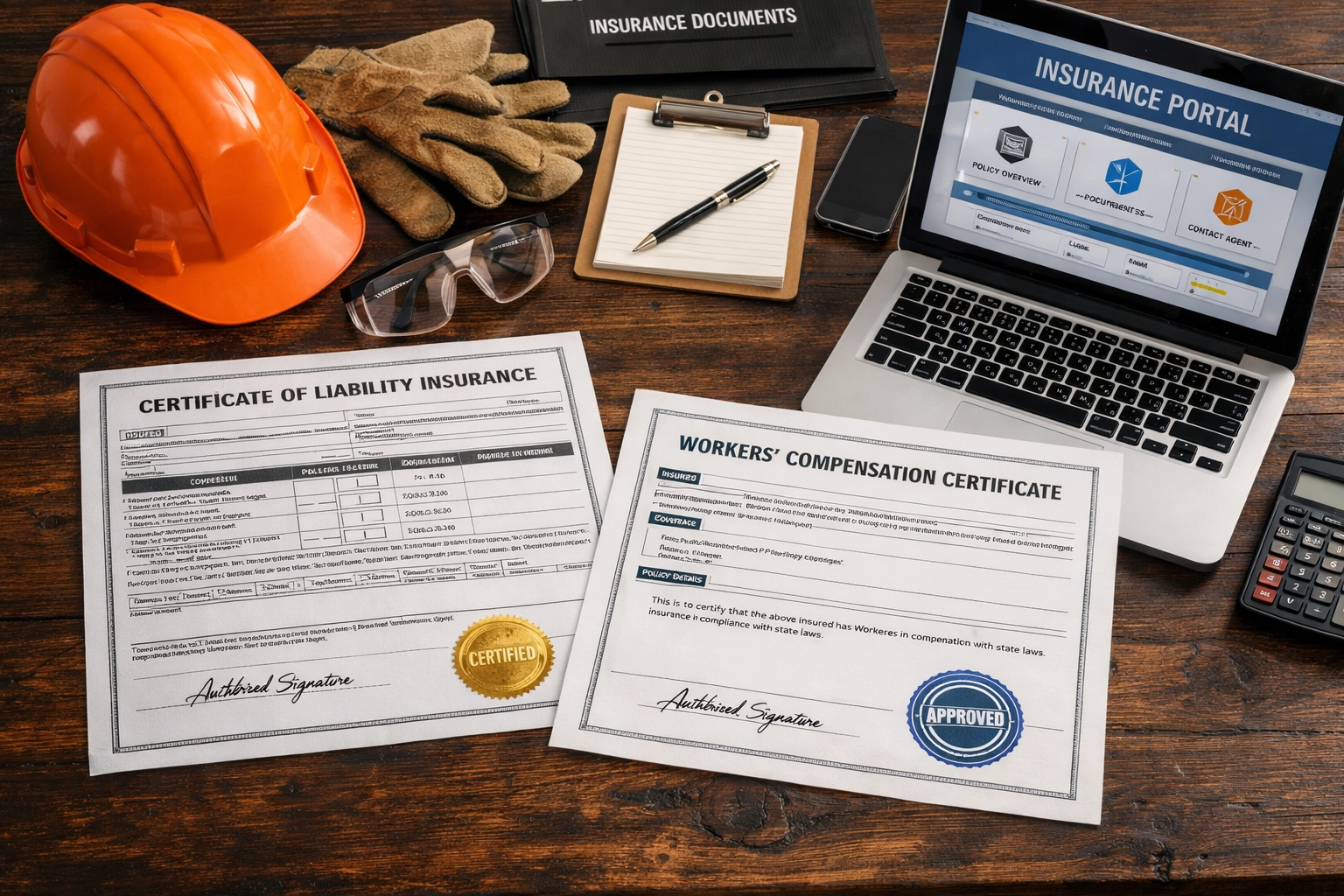
General liability insurance serves as a fundamental requirement for contractor licensing applications across all jurisdictions. State licensing boards typically require proof of coverage before processing applications or issuing licenses.
Workers' compensation insurance represents another mandatory component of multi-state compliance. Each state maintains its own workers' compensation regulations and coverage mandates. Contractors must provide certificates of insurance demonstrating adequate workers' compensation protection for employees working in each licensed state.
Inland marine insurance protects tools, equipment, and materials during transit between jobsites. Contractors operating across multiple states face elevated exposure to equipment theft and damage during transportation. This coverage fills critical gaps that standard commercial property policies may not address.
Certificate of insurance documents must list the state contractor board as an additional insured party. This requirement allows licensing authorities to verify active coverage and receive notification if policies lapse or cancel.
Professional liability coverage protects general contractors from errors and omissions claims related to design-build projects or construction management services. Multi-state contractors performing these specialized services should evaluate whether their general liability policies provide adequate protection for professional service exposures.
Application Components and Documentation Standards
The licensing application process requires substantial documentation demonstrating financial stability and professional competence. Contractors must prepare comprehensive submissions addressing business structure, financial condition, insurance coverage, and professional qualifications.
Financial statements prepared by certified public accountants form a core component of most applications. State boards review these documents to assess the contractor's financial capacity to complete projects and meet obligations to subcontractors and suppliers.
Equipment and asset listings demonstrate the contractor's operational capabilities. These inventories should include owned and leased equipment, along with documentation of equipment values and financing arrangements.
Litigation summaries require disclosure of any legal actions involving the contracting business or its principals. This includes lawsuits, arbitration proceedings, and regulatory complaints. Complete disclosure prevents application delays or denials based on background investigations.
Banking references and supplier relationships provide third-party verification of the contractor's business practices and financial management. Strong references from established financial institutions and trade suppliers strengthen applications.
Qualifying Party Requirements and Examinations
Each licensed contractor must designate a qualifying party responsible for overseeing construction activities in the licensed state. This individual must meet specific education, experience, and skill requirements established by the licensing board.
Trade examinations test knowledge of construction methods, building codes, and industry standards. Business and law examinations cover contract law, lien rights, safety regulations, and business management principles. Most states require qualifying parties to pass both examination components before obtaining licensure.
States with reciprocal agreements may waive trade examination requirements for contractors already licensed in partner jurisdictions. However, business and law examinations typically remain mandatory even when reciprocity applies. These open-book examinations test knowledge of state-specific regulations and legal requirements.
Background checks for qualifying parties and company officers verify professional history and identify any disciplinary actions or criminal records that might disqualify applicants. Complete and accurate disclosure during this process prevents delays and demonstrates professional integrity.
Business Registration and Foreign Qualification
Contractors must register their business entities with each state's Secretary of State office before applying for contractor licenses. This process differs significantly between sole proprietorships, partnerships, limited liability companies, and corporations.
Foreign qualification allows out-of-state business entities to conduct operations in new jurisdictions. This registration process requires filing organizational documents, appointing registered agents, and paying applicable fees to state authorities.
Registered agents receive legal documents and official correspondence on behalf of the business. Every state where the contractor maintains licensure requires appointment of a registered agent with a physical address in that jurisdiction. This ensures regulatory authorities and legal parties can properly serve documents when necessary.
Department of Revenue registration establishes state tax identification numbers and enables contractors to collect and remit sales taxes on materials and services. Compliance with state tax requirements forms a prerequisite for contractor licensing in most jurisdictions.

Timing Considerations and Application Planning
State licensing boards typically meet on quarterly schedules to review applications and issue licenses. Missing an application deadline can delay approval by three months or longer. Strategic planning around board meeting dates prevents costly project delays.
Examination scheduling requires advance planning. Many states offer examinations only during specific testing windows or at designated locations. Qualifying parties should register for required examinations well before anticipated project start dates.
License renewals follow state-specific schedules and requirements. Contractors must track multiple renewal dates when operating in several jurisdictions. Allowing licenses to lapse can result in project shutdowns and regulatory violations.
Maintaining Compliance Across Multiple Jurisdictions
Active monitoring of insurance policy expiration dates prevents coverage gaps that could trigger license suspensions. Establish systems to track policy renewal dates and ensure timely premium payments to maintain continuous coverage.
Continuing education requirements vary by state and license type. Some jurisdictions mandate annual training hours covering code updates, safety standards, and business practices. Failing to complete required education can prevent license renewal.
Local licensing requirements exist in certain jurisdictions where municipalities maintain their own contractor registration systems. Research county and city-level requirements in addition to state licensing mandates.
Disciplinary actions in one state may impact licensing eligibility in other jurisdictions. Maintaining professional standards and ethical business practices across all operations protects multi-state licensing privileges.
Risk Management for Multi-State Construction Operations
Equipment breakdown coverage protects mechanical and electrical equipment from sudden failures that could halt construction operations. Contractors operating across multiple states benefit from this coverage when coordinating complex project timelines and equipment deployments.
Pollution liability coverage addresses environmental exposures related to construction activities. Soil disturbance, material handling, and equipment operations create potential environmental incidents that standard general liability policies may exclude.
Cyber liability protection has become increasingly relevant for contractors managing project data, client information, and electronic payment systems. Multi-state operations amplify data breach exposures and regulatory compliance obligations under various state privacy laws.

Strategic Planning for License Acquisition
Budget adequate time for the complete licensing process. Applications, examinations, and board approvals typically require several months from initial submission to license issuance. Build these timelines into project planning and bid schedules.
Research each target state's specific requirements before committing to project bids. Understanding licensing thresholds, insurance mandates, and application procedures prevents costly surprises during project execution.
Consult with legal counsel familiar with construction licensing regulations in your target states. Professional guidance helps navigate complex regulatory requirements and avoid compliance pitfalls that could jeopardize operations.
Establish relationships with insurance professionals who understand multi-state construction exposures. Proper coverage design and documentation streamline licensing applications and protect against operational risks.
Insurance Alliance LLC provides comprehensive coverage solutions for general contractors operating across Florida, Texas, Arizona, Idaho, and Washington. Our team understands the insurance documentation requirements for multi-state licensing applications and ongoing compliance obligations. Contact us to discuss your contractor insurance needs.

Comments