
Landscaping Business Insurance: Protecting Your Fleet and Equipment Across Multiple States
- marketing676641
- Feb 26
- 8 min read
Landscaping businesses operate in a high-risk environment characterized by mobile operations, heavy machinery, and high-value inventory. Protecting these assets requires a sophisticated insurance strategy that accounts for the movement of equipment across state lines. Maintaining comprehensive coverage ensures that operations continue without interruption regardless of the geographic location of the job site. This guide details the essential coverage components, compliance requirements, and risk management practices for landscaping enterprises managing fleets and equipment in multiple jurisdictions.
Commercial Auto Insurance for Landscaping Fleets
A landscaping fleet often includes a variety of vehicles, ranging from light-duty pickup trucks to heavy-duty dump trucks and specialized trailers. Each vehicle requires specific designations within a commercial auto policy to ensure full protection.
Comprehensive and Collision Coverage
Commercial auto insurance provides physical damage protection for the vehicles owned by the business. Collision coverage applies when a vehicle hits another object or overturns. Comprehensive coverage applies to non-collision events such as theft, vandalism, fire, or weather-related damage. In a multi-state operation, vehicles are exposed to varying environmental risks. Ensuring that the entire fleet is covered under a blanket policy provides consistency across all operational areas.
Hired and Non-Owned Auto (HNOA)
Landscaping businesses frequently utilize rented vehicles or require employees to use personal vehicles for business errands. Standard commercial auto policies may not automatically cover these scenarios. Hired and Non-Owned Auto coverage protects the business against liability when vehicles not owned by the company are used for business purposes. This is critical for businesses that scale up operations during peak seasons by renting additional trucks.
Trailer Coverage and Towing Risks
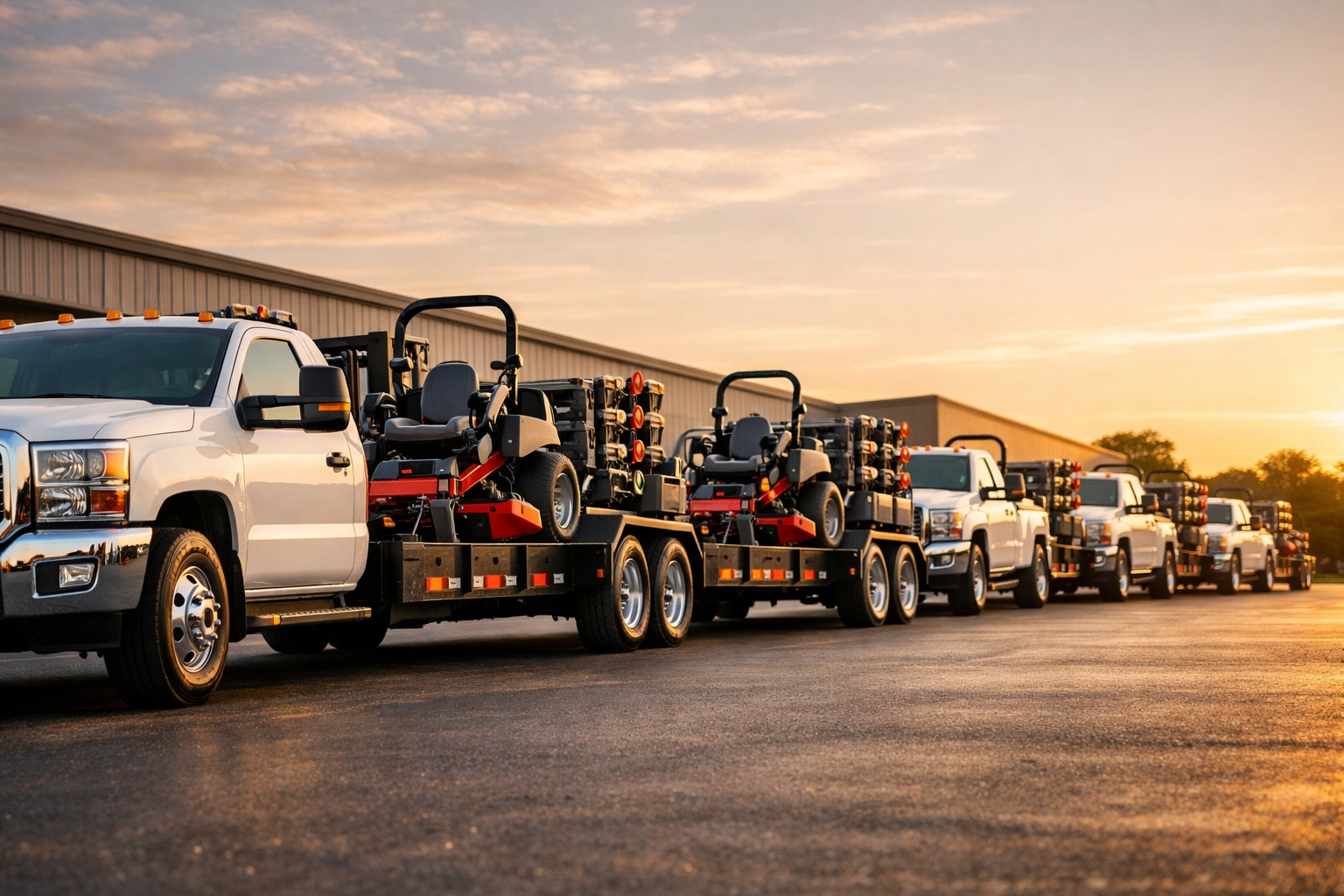
Trailers are the backbone of landscaping logistics. They transport mowers, skid steers, and handheld tools. It is essential to verify that trailers are specifically listed on the commercial auto policy. Coverage must extend to the trailer while it is attached to a power unit and while it is unattached at a job site. Liability risks increase when towing heavy loads, making proper weight-rating compliance and hitch inspections vital components of a risk management plan.
Inland Marine Insurance: Protecting Mobile Equipment
While commercial auto insurance covers the vehicles, it generally does not cover the high-value equipment transported in or on those vehicles. Inland marine insurance is the primary mechanism for protecting mobile machinery and tools.
Scheduled vs. Blanket Equipment Coverage
For landscaping businesses, equipment can be categorized into two types: scheduled and blanket.
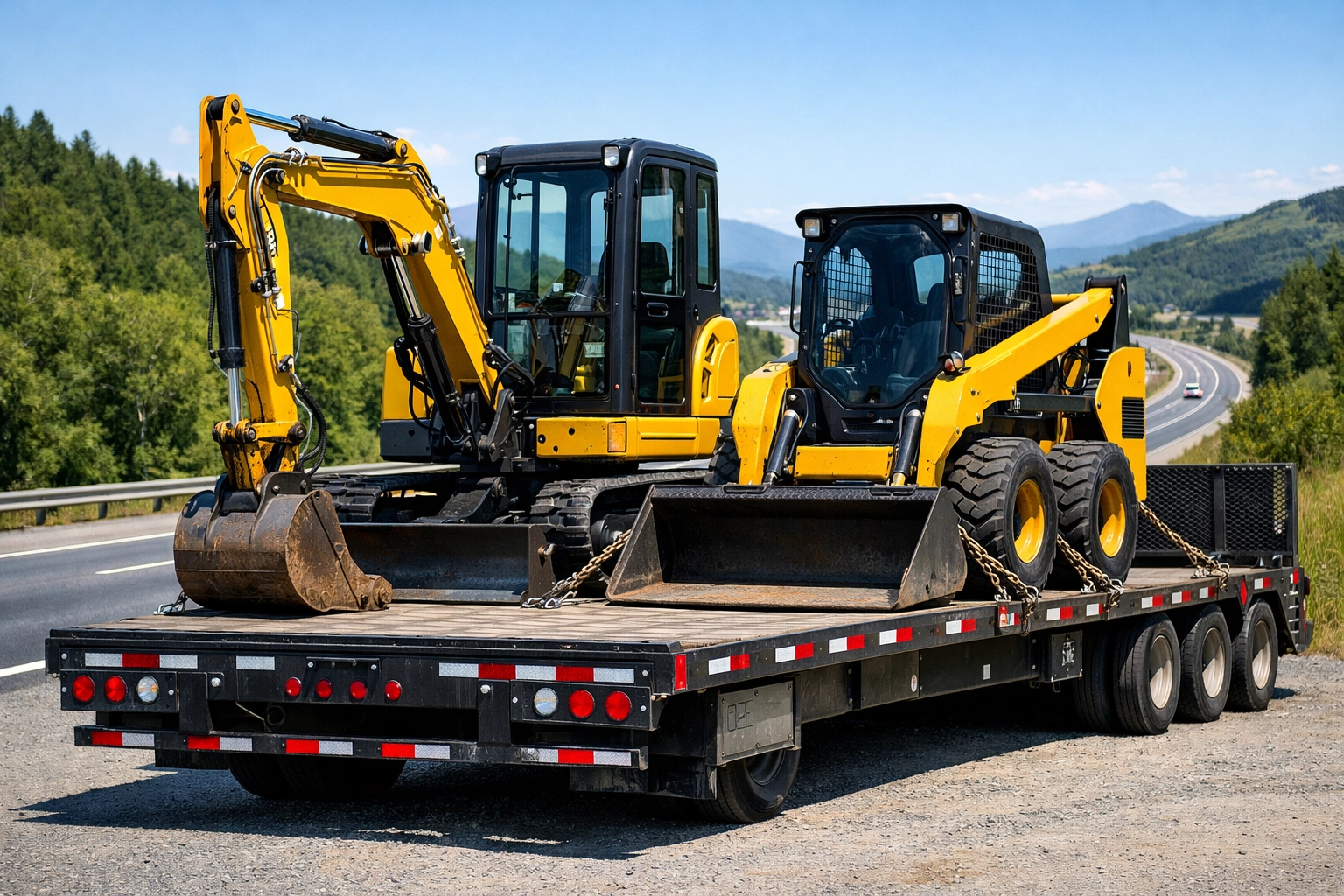
Scheduled Equipment: This includes high-value items such as backhoes, excavators, and large zero-turn mowers. Each piece is listed individually with its serial number and appraised value.
Blanket Coverage: This covers smaller tools like trimmers, blowers, and hand tools. Rather than listing every individual shovel, a total limit is set for the collective value of small equipment.
Transit and Off-Site Protection
Inland marine insurance is specifically designed for property that moves from one location to another. Unlike standard property insurance, which is often tied to a specific address, inland marine follows the equipment to the job site, the storage yard, and everywhere in between. This is indispensable for businesses operating across state lines, as the equipment is constantly in transit.
Leased or Rented Equipment Coverage
Many landscaping projects require specialized machinery that the business may not own. Inland marine policies can be endorsed to include coverage for equipment leased or rented from third parties. This ensures that the business remains compliant with the insurance requirements set by rental agencies.
Learn more about comprehensive business protections at Insurance Alliance LLC Business Insurance.
Multi-State Compliance and Regulatory Standards
Operating across state lines introduces complex regulatory requirements. Businesses must ensure that their insurance structure meets the legal standards of every jurisdiction where they perform work.
Federal Motor Carrier Safety Administration (FMCSA) Requirements
Landscaping businesses operating vehicles over a certain weight limit (typically 10,001 lbs) across state lines are subject to FMCSA regulations. This includes obtaining a DOT number and adhering to strict hours-of-service and maintenance rules. Insurance providers often require proof of DOT compliance to maintain active commercial auto coverage for interstate hauling.
Unified Carrier Registration (UCR)
The UCR program requires businesses that operate commercial motor vehicles in interstate commerce to register and provide proof of financial responsibility. Maintaining an active insurance policy that meets federal minimums is a prerequisite for UCR compliance.
Workers' Compensation Across State Lines
Workers' compensation requirements vary significantly. When employees cross state lines to perform landscaping work, the business must ensure that the policy includes "Other States Coverage." This ensures that if an injury occurs in a state other than the primary business location, the policy responds according to that state's specific workers' compensation laws.
Risk Management for Heavy Machinery
Protecting equipment involves more than just insurance; it requires proactive risk management to prevent loss and ensure operational longevity.
Telematics and GPS Tracking
Installing GPS tracking on all high-value machinery allows for real-time monitoring of equipment location. Telematics systems can also track engine hours and maintenance needs. In the event of theft, GPS data is the most effective tool for recovery, reducing the duration of business interruptions.
Operator Training and Safety Protocols
The most significant risk to heavy machinery is improper operation. Businesses should implement mandatory training programs for all equipment operators. This includes:
Pre-operation safety checks.
Load-securing procedures for transport.
Safe operation on slopes and uneven terrain.
Refueling safety protocols to prevent fire risks.
Preventative Maintenance Schedules
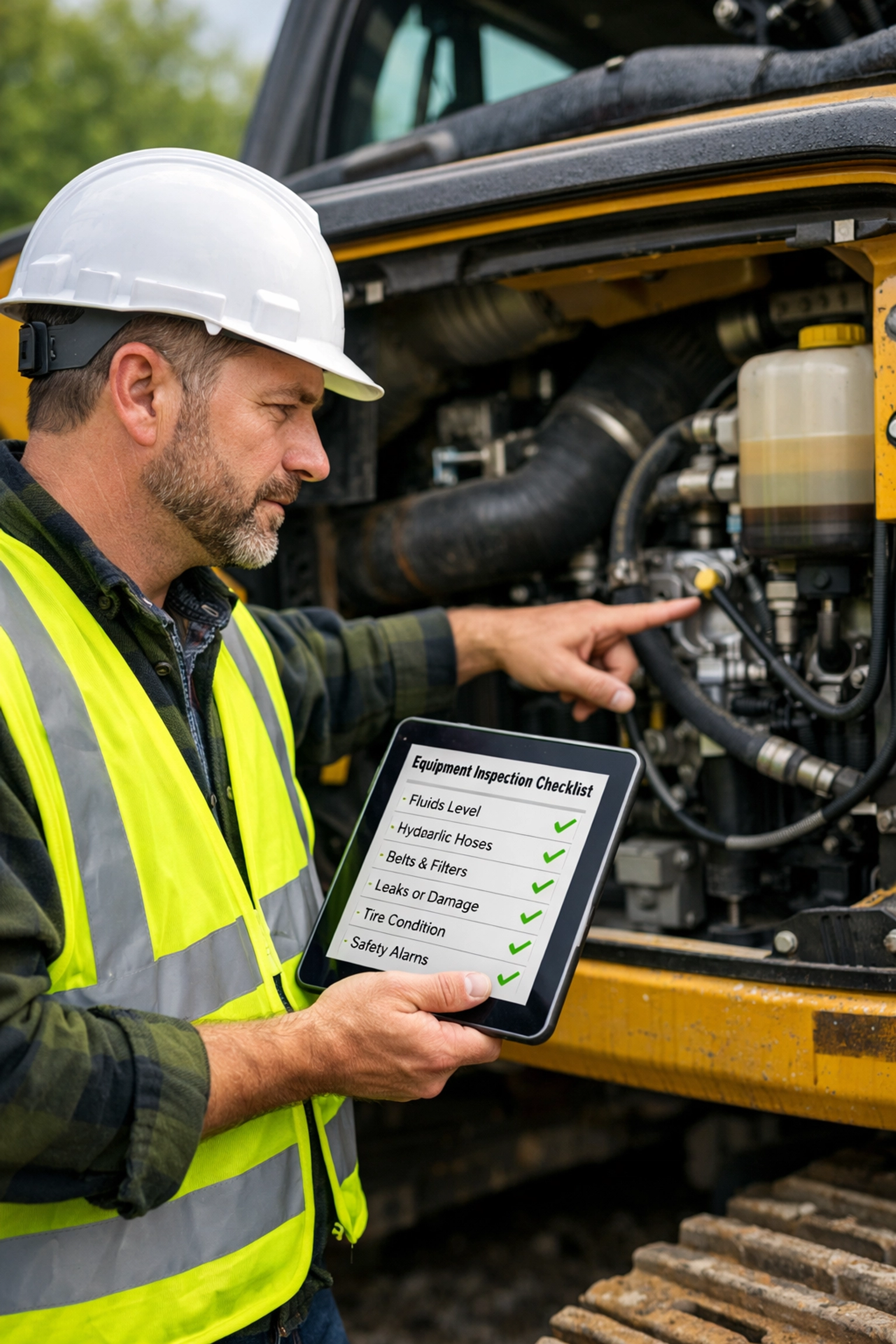
Documented maintenance logs are essential for risk management. Regular inspections of hydraulic lines, braking systems, and electrical components prevent mechanical failures that could lead to accidents. Insurance underwriters often look for a commitment to rigorous maintenance when evaluating the risk profile of a landscaping fleet.
Specialized Coverage Extensions for Landscapers
Standard policies may have gaps that require specialized endorsements to ensure full protection for landscaping-specific risks.
Pollution Liability
Landscapers often handle pesticides, herbicides, and fertilizers. A standard liability policy may exclude damages caused by the release of these chemicals. A pollution liability endorsement provides coverage for the unintended spread or spill of chemicals, protecting the business from environmental remediation requirements.
Installation Floaters
If a landscaping project involves installing expensive features like outdoor lighting, irrigation systems, or large trees, an installation floater is necessary. This covers the materials from the moment they are loaded for transport until they are permanently installed and accepted by the client.
Cargo Insurance for Live Plants
Inland marine policies sometimes exclude "living things." For businesses transporting thousands of dollars in nursery stock, trees, and shrubs, specialized cargo coverage is needed. This protects against the loss of plant material due to transit accidents or equipment failure (such as a failure of a climate-controlled trailer).
For additional insights into contractor-related risks, see The Complete Guide to General Contractor Insurance in 2025.
Asset Management and Documentation Strategies
Proper documentation is the foundation of a robust insurance program. When assets move across state lines, keeping track of their status is critical.
Digital Inventory Management
Maintain a digital database of all equipment, including:
Make, model, and year.
Serial numbers and VINs.
Original purchase receipts and dates.
Photographs of the equipment from multiple angles.
Records of any aftermarket modifications or attachments.
Secure Storage and Job Site Security
Equipment left at job sites overnight is a primary target for theft. Risk management strategies should include the use of high-quality locks, geofencing via GPS, and, where possible, securing equipment behind locked gates or inside trailers. For multi-state operations, vetting the security of remote storage yards is a necessary step in the expansion process.
Certificate of Insurance (COI) Tracking
When working as a subcontractor on large multi-state projects, landscaping firms are often required to provide Certificates of Insurance. Conversely, if a landscaping firm hires subcontractors for specialized tasks (like tree removal or irrigation), they must track the COIs of those subcontractors to ensure there are no gaps in liability.
The Role of Umbrella and Excess Liability
Given the high weights of landscaping vehicles and the power of heavy machinery, the potential for significant property damage or bodily injury is high.
Increasing Liability Buffers
A commercial umbrella policy provides additional limits of insurance above the primary commercial auto and general liability policies. In the event of a catastrophic incident involving a fleet vehicle, the umbrella policy activates once the primary limits are exhausted. This is particularly important for businesses operating in high-traffic urban areas across multiple states where the risk of multi-vehicle accidents is elevated.
Consistency in Coverage Limits
By utilizing an umbrella policy, a business can maintain a consistent level of protection across all service areas. This simplifies the bidding process for large contracts, as many commercial clients require high liability limits that exceed standard policy offerings.
Professional Liability for Landscape Design
Many landscaping firms have expanded into design-build services. This introduces professional risks that are not covered by general liability or inland marine policies.
Design and Consultation Errors
If a landscape architect or designer provides plans that lead to drainage issues, soil erosion, or structural failure of a retaining wall, professional liability insurance (also known as Errors and Omissions) is the relevant coverage. This protects the business against claims of negligence in the professional services provided.
Integrating Design and Execution
Ensuring that design-build operations are fully integrated into the insurance program prevents gaps between the "advice" given and the "work" performed. This is a common area of overlooked risk for growing landscaping enterprises.
Disaster Recovery and Business Continuity
Mobile operations are susceptible to regional disasters, from hurricanes in the south to blizzards in the north.
Business Interruption for Mobile Operations
While traditional business interruption insurance is tied to a physical location, landscaping businesses can seek coverage that accounts for the loss of income when equipment is destroyed, preventing the completion of ongoing contracts. This is vital for maintaining cash flow during the period it takes to replace specialized machinery.
Recoop Disaster Insurance
For businesses looking for rapid recovery after a declared disaster, products like Recoop provide a lump-sum benefit. This can be used to cover immediate needs that standard policies might not address quickly, such as temporary equipment rentals or emergency debris removal to get the fleet back on the road.
For more information on disaster-specific protections, visit our blog section.
Fleet Driver Safety Programs
The safety of the fleet is directly tied to the behavior of the drivers. Implementing a formal driver safety program is a key risk management strategy.
Motor Vehicle Record (MVR) Standards
Businesses should establish clear criteria for who is allowed to drive company vehicles. This involves regular reviews of MVRs to ensure that drivers have clean records. Consistent enforcement of these standards across all states of operation reduces the likelihood of accidents.
Distracted Driving Policies
With the use of mobile devices for routing and communication, distracted driving is a significant risk. Strict policies prohibiting the use of handheld devices while driving should be part of the employee handbook.
Vehicle Inspection Reports
Requiring drivers to complete daily vehicle inspection reports (DVIRs) ensures that mechanical issues are identified before the vehicle leaves the yard. This includes checking tire pressure, lights, brakes, and fluid levels. For trailers, inspectors must verify the integrity of the hitch and the functionality of safety chains and trailer brakes.
Conclusion
Managing a landscaping business that spans multiple states requires a meticulous approach to insurance and risk management. By focusing on comprehensive commercial auto policies, detailed inland marine coverage for heavy machinery, and strict adherence to multi-state compliance standards, business owners can protect their assets and ensure long-term stability. Documentation, operator training, and specialized endorsements for pollution and design risks further fortify the business against the unique challenges of the landscaping industry.
Insurance Alliance LLC provides the expertise needed to navigate these complex coverage requirements, ensuring that your fleet and equipment are protected wherever the job takes you. Explore our full range of services and resources through our sitemap or contact our team for guidance on your specific insurance needs.

Comments