
Flooring Contractor Insurance: Ensuring Workmanship and Installation Quality with Proper Coverage
- marketing676641
- Feb 26
- 8 min read
Professional flooring installation requires a combination of technical precision, material knowledge, and adherence to strict industry standards. Whether laying intricate hardwood patterns, installing commercial-grade carpeting, or setting large-format porcelain tiles, flooring contractors face unique operational risks. Ensuring the longevity of a project and the stability of a business involves more than just craftsmanship; it requires a robust insurance strategy focused on workmanship, compliance, and comprehensive risk management.
A comprehensive insurance program for flooring professionals centers on protecting the business from liabilities and ensuring that materials are secured throughout the project lifecycle. This guide examines the critical components of flooring contractor insurance, with a specific focus on the Business Owner’s Policy (BOP) and installation floaters.
The Role of a Business Owner’s Policy (BOP)
For many flooring contractors, the Business Owner’s Policy (BOP) serves as the primary structural element of their insurance portfolio. A BOP is a bundled insurance solution that integrates several essential coverages into a single framework. This approach provides a streamlined method for managing core risks associated with operating a specialty trade business.
General Liability Coverage
The general liability component of a BOP addresses third-party risks. In the flooring industry, the physical environment is constantly changing. Tools, adhesive buckets, and stacks of flooring materials create potential hazards for clients or other tradespeople on a job site.
General liability provides coverage for:
Third-Party Bodily Injury: If a client or a visitor trips over a transition strip or a tool left in a walkway, this coverage addresses the resulting legal and medical obligations.
Third-Party Property Damage: If a contractor accidentally damages a wall while moving heavy bundles of flooring or spills stain on an expensive rug that was not moved from the work area, property damage coverage applies.
Products and Completed Operations: This is a vital sub-limit for flooring contractors. It addresses instances where the work performed causes damage or injury after the project is finished and the contractor has left the site.
Commercial Property Insurance
The property insurance portion of a BOP protects the physical assets owned by the flooring business. This includes the office space, the warehouse where inventory is stored, and the office furniture and computer systems used for estimating and project management.
For contractors who maintain a significant inventory of wood, tile, or stone, property insurance ensures that if the warehouse suffers from fire, windstorms, or other covered perils, the business can recover the value of the stored materials. It is important to note that this typically covers items at the scheduled business location rather than those in transit or at a customer’s site.
Business Interruption Insurance
Business interruption insurance is often included in a BOP. This coverage is designed to support the business if a covered property loss makes it impossible to operate. For example, if a fire damages the flooring warehouse and prevents the contractor from fulfilling contracts, business interruption provides support for ongoing expenses and lost income during the restoration period.

Protecting Materials with Installation Floaters
One of the most significant risks for a flooring contractor is the period between purchasing materials and completing the installation. Standard property insurance often stops at the warehouse door, and general liability does not typically cover damage to the contractor's own materials. This is where the installation floater becomes essential.
Coverage for Materials in Transit
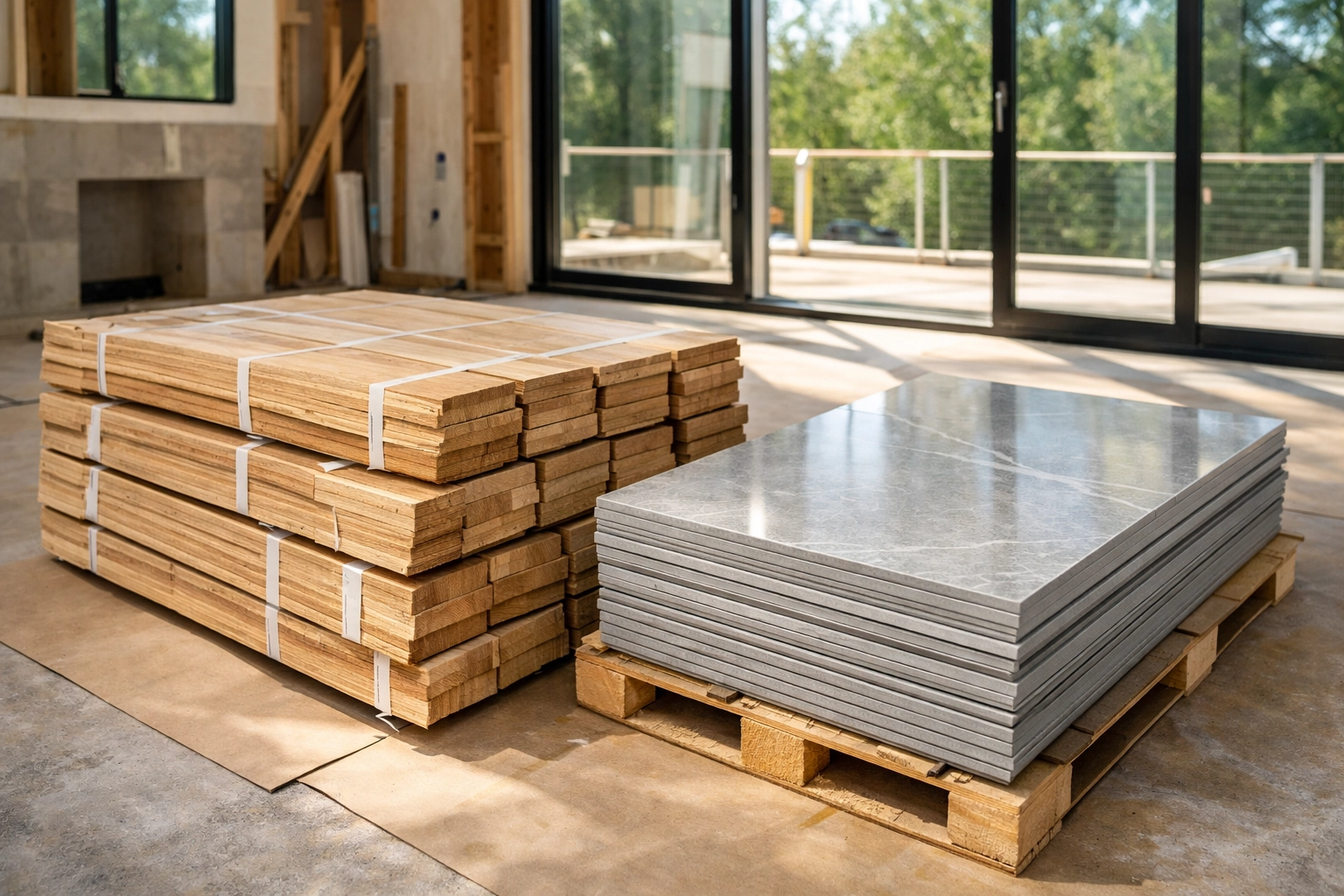
Flooring materials are often heavy, fragile, and expensive. Hardwood can warp if exposed to moisture during transport; tiles can crack if a vehicle hits a significant pothole; and high-end stone can be damaged by improper loading. An installation floater provides coverage for these materials from the moment they leave the supplier or the warehouse until they are permanently installed in the structure.
On-Site Storage Protection
On many job sites, especially in new construction, flooring materials are delivered days or weeks before the installation begins to allow for acclimation. During this time, the materials are vulnerable to theft, vandalism, or damage from other contractors working in the same space. The installation floater extends protection to these materials while they sit on the job site, ensuring that the contractor does not face a total loss of materials before the first plank is even laid.
Integration with Inland Marine Insurance
An installation floater is a specialized type of inland marine insurance. While the floater covers the materials that will become a permanent part of the building, flooring contractors also need coverage for their specialized tools. Sanders, saws, moisture meters, and pneumatic nailers are high-value items that move from site to site. Inland marine insurance ensures these tools are covered against theft or damage while in transit or at various job locations.
Workmanship and Quality Control: Beyond Basic Liability
A common misconception in the flooring industry is that general liability insurance covers "bad workmanship." In reality, most general liability policies contain a "Your Work" exclusion, which means the policy does not cover the cost to repair or replace the faulty work itself. To manage the risks associated with installation quality and professional advice, flooring contractors must focus on professional liability and rigorous risk management.
Professional Liability (Errors and Omissions)
Flooring contractors do more than just manual labor; they provide professional advice. They recommend specific materials based on the client’s environment, such as suggesting moisture-resistant luxury vinyl plank (LVP) for a basement rather than solid hardwood.
If a contractor provides incorrect advice: such as recommending a specific adhesive that fails under certain temperature conditions: and the entire floor must be replaced, professional liability insurance addresses the financial loss resulting from that advice. This coverage is essential for contractors who handle design-build projects or offer consulting services regarding material selection.
Completed Operations and Latent Defects
Flooring issues often do not appear immediately. A subfloor that was not properly leveled might cause floorboards to "pop" or creak months after the installation. If this defect leads to a physical injury or damages other parts of the property, the completed operations portion of the liability policy becomes active.
Risk Management Strategies for Flooring Contractors
Effective insurance is only one half of a protection strategy. The other half is risk management: the proactive steps taken to prevent losses from occurring in the first place. For flooring professionals, quality control is the most effective way to maintain a clean insurance record and high workmanship standards.
Moisture Testing and Documentation
Moisture is the primary cause of flooring failure. Whether it is a concrete slab emitting vapor or high humidity causing wood expansion, moisture-related issues lead to significant rework.
Protocol: Always perform calcium chloride or in-situ probe testing on concrete subfloors.
Documentation: Maintain detailed logs of moisture readings before, during, and after installation.
Compliance: Follow the National Wood Flooring Association (NWFA) or Tile Council of North America (TCNA) guidelines for moisture limits.
By documenting that all manufacturer specifications were met at the time of installation, a contractor provides a strong defense against allegations of negligence or poor workmanship.
Subfloor Preparation
Ensuring the substrate is flat, clean, and structurally sound is the foundation of a quality installation. Rushing this stage is a common cause of future disputes. Risk management involves:
Inspecting the subfloor for any signs of structural instability.
Ensuring the substrate is free of dust, wax, or oil that could interfere with adhesives.
Using self-leveling compounds where necessary to meet flatness tolerances.
Subcontractor Management
Many flooring companies utilize independent installers. This creates a complex layer of risk. If a subcontractor causes damage, the primary contractor may still be held responsible.
Compliance: Always require subcontractors to provide a Certificate of Insurance (COI).
Verification: Ensure their limits are equal to or greater than your own.
Additional Insured: Require that your business be named as an "Additional Insured" on the subcontractor’s policy to ensure primary coverage in the event of a loss caused by their work.
Regulatory Compliance and Contractual Obligations
Insurance for flooring contractors is not just a safety net; it is often a legal and contractual requirement. Operating without proper coverage can lead to fines, loss of licensure, and the inability to bid on high-value projects.
State and Local Licensing
Most jurisdictions require contractors to prove they carry general liability and workers' compensation insurance before issuing or renewing a trade license. Maintaining these policies ensures the business remains in good standing with local regulatory bodies.
Contractual Requirements in Commercial Projects
In commercial flooring, contracts often dictate specific insurance requirements. A General Contractor (GC) or property owner may require:
Waiver of Subrogation: This prevents the insurance carrier from seeking recovery from the GC after paying for a loss.
Primary and Non-Contributory Language: This ensures the flooring contractor's policy pays first in the event of a shared loss.
Per Project Aggregates: This ensures the full limit of insurance is available for a specific project, regardless of losses on other job sites.
For more information on navigating these complex requirements, you can review our complete guide to general contractor insurance.

Additional Specialized Coverages
While the BOP and installation floaters form the core, other coverages are necessary to address the modern landscape of the flooring business.
Commercial Auto Insurance
Flooring contractors rely on vans and trucks to transport heavy loads of materials and equipment. Personal auto policies typically exclude coverage for vehicles used for business purposes, especially when carrying commercial cargo. Commercial auto insurance covers the unique risks of heavy-duty vehicles, including loading and unloading operations.
Workers’ Compensation
Flooring installation is physically demanding. Installers spend hours on their knees, lift heavy bundles of tile, and handle sharp tools. Workers’ compensation is a mandatory coverage in most regions for businesses with employees. It provides medical benefits and wage replacement for workers who suffer job-related injuries. A strong focus on safety training: such as proper lifting techniques and the use of personal protective equipment (PPE): reduces the risk of workplace accidents.
Cyber Liability Insurance
As flooring contractors adopt digital tools for project management, customer databases, and electronic payments, they become targets for cyber threats. If a contractor’s system is breached and customer information is compromised, cyber liability insurance supports the business through data recovery, legal notifications, and regulatory compliance. This is increasingly important for contractors who manage large-scale commercial contracts involving sensitive data.
Umbrella and Excess Liability
For contractors working on high-value residential properties or large commercial developments, the standard limits of a general liability policy may not be sufficient. An umbrella or excess liability policy provides additional limits that sit above the primary general liability and commercial auto policies. This ensures that a single catastrophic event does not exceed the business's total coverage capacity.
Ensuring Longevity through Professional Standards
The flooring industry is built on reputation. A single high-profile installation failure can damage a brand irreparably. By aligning business operations with comprehensive insurance coverage, flooring professionals demonstrate a commitment to quality and accountability.
A Business Owner’s Policy provides the necessary protection for the office and general liability, while specialized tools like installation floaters protect the materials that are the lifeblood of the business. When combined with rigorous risk management: such as meticulous moisture testing and subcontractor vetting: these coverages create a framework for long-term success.
For contractors looking to expand into other areas of specialty trade, understanding the nuances of different sectors is vital. Whether you are moving into roofing contractor insurance or managing specialized office spaces like a massage therapist office, the principles of risk management and comprehensive coverage remain the same.
Insurance Alliance LLC stands as a knowledgeable resource for flooring professionals seeking to navigate the complexities of coverage and compliance. By focusing on the unique risks of the flooring trade, contractors can ensure their workmanship remains the focal point of their business, supported by the security of professional insurance solutions.
For a broader view of our services and how we support various industries, you can explore our business insurance solutions or view our sitemap for a full directory of our resources.
Insurance Alliance LLC https://www.theinsalliance.com Expert Guidance in Business, Life, and Disaster Insurance.
Comments